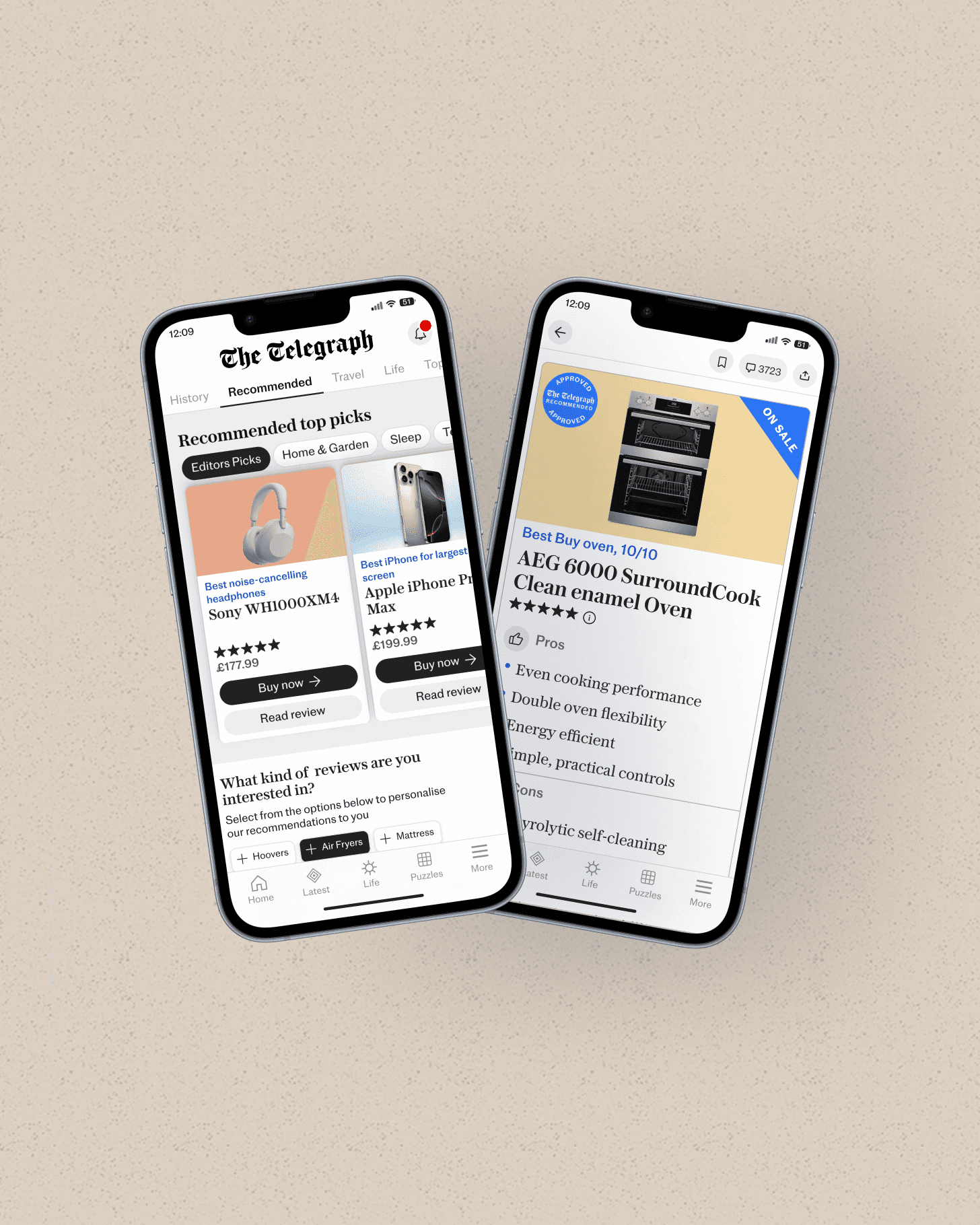
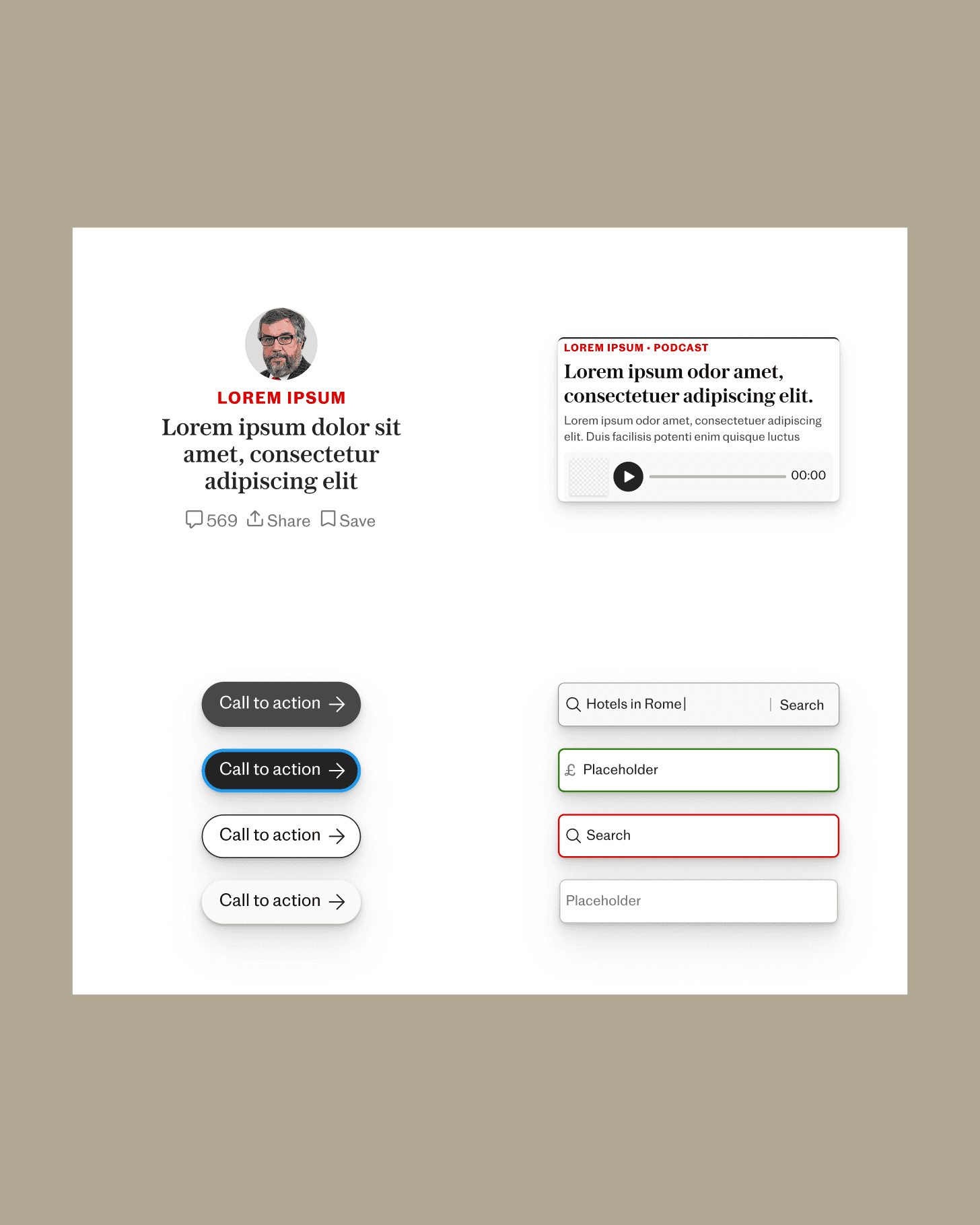
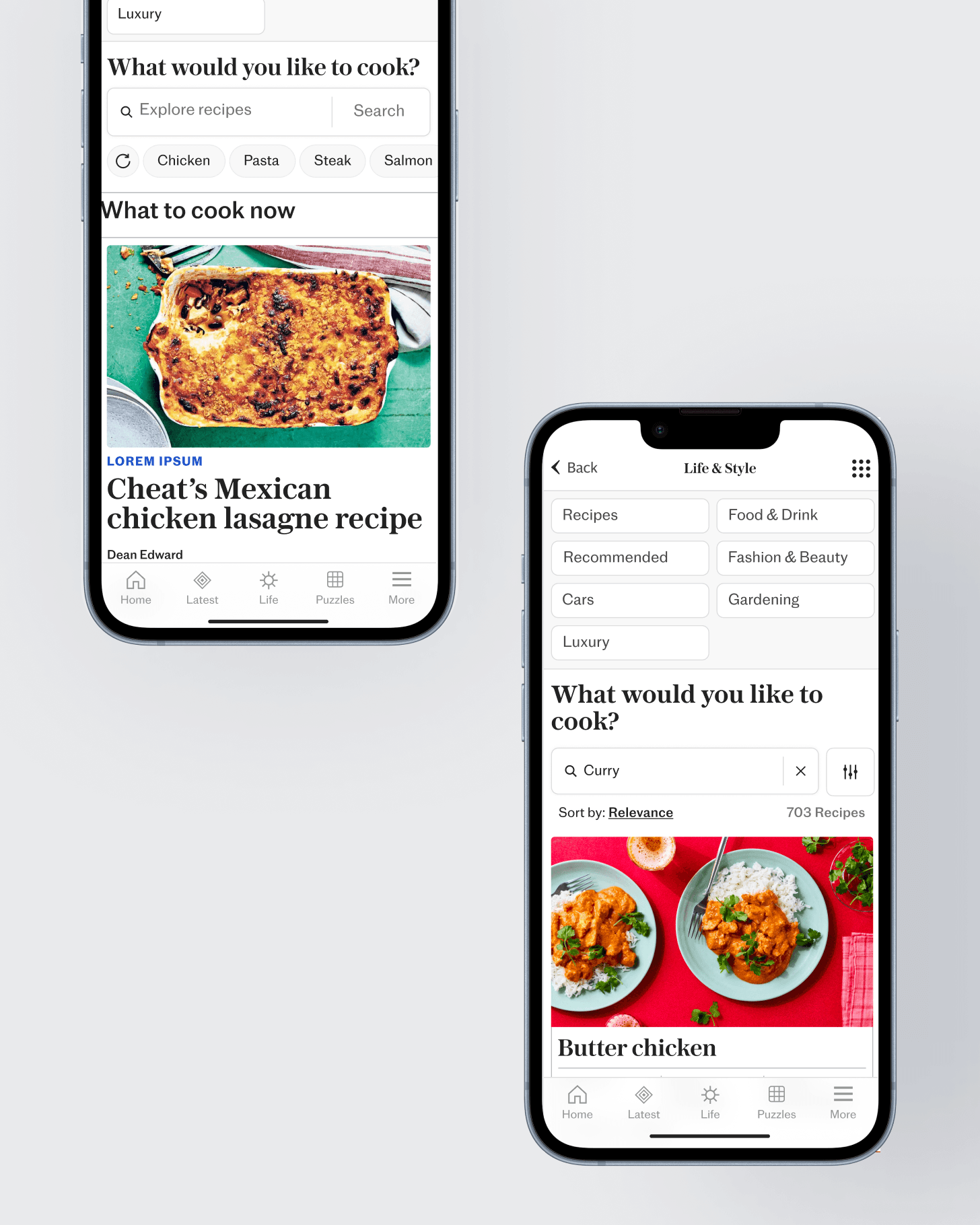
A softer side of design.
tYPE
UI Design · Accessibility Design · Design Systems
ROLE
Lead Product Designer
pLATFORM
iOS, Android (Mobile App)
TOOLS
Figma · UserZoom · Google Analytics
The Context
The Elegance Had a Curfew
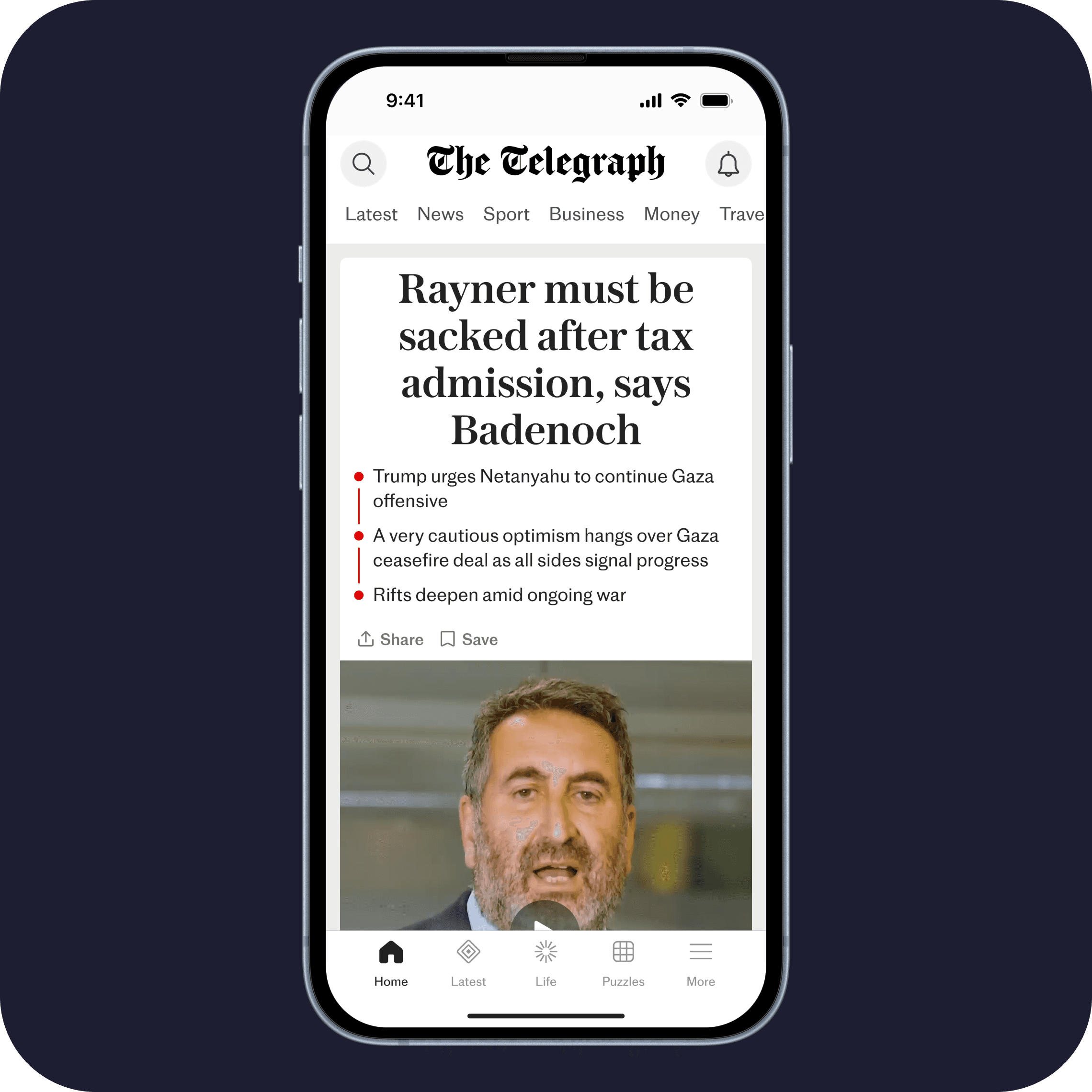
In 2025, reading The Daily Telegraph late at night meant battling bright white screens that felt anything but premium. What was once a clear, elegant reading experience during the day became harsh and uncomfortable in low light, leaving loyal readers searching for alternatives.
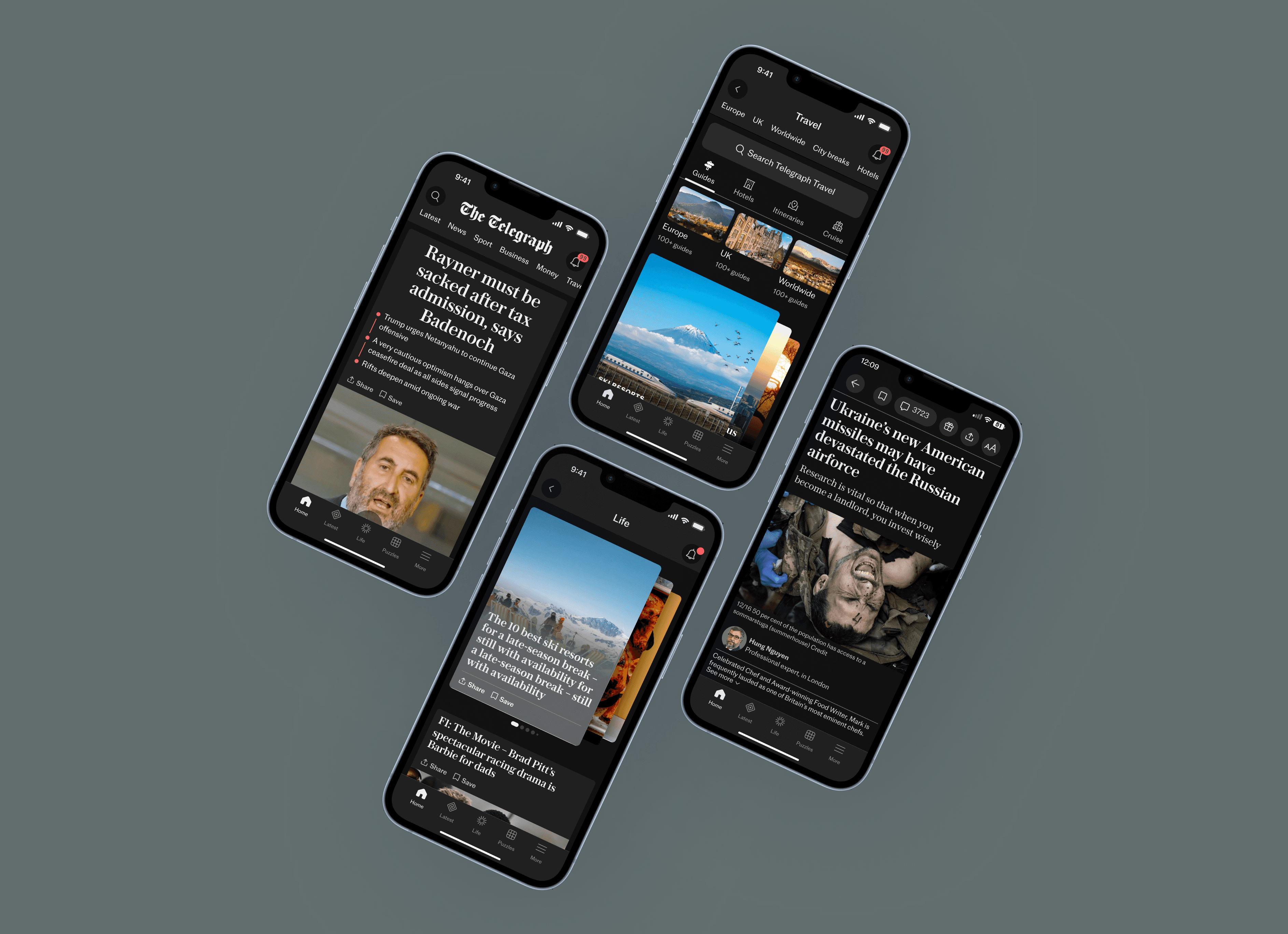
I joined an ambitious project to redesign the app experience from the ground up, introducing Dark Mode a system-wide feature that balanced readability, accessibility, and the brand’s signature sense of authority. Our goal was simple but bold: bring comfort back to night-time reading in six months without losing the brand’s signature voice.
The Challange
The Magic Wore Off at Night
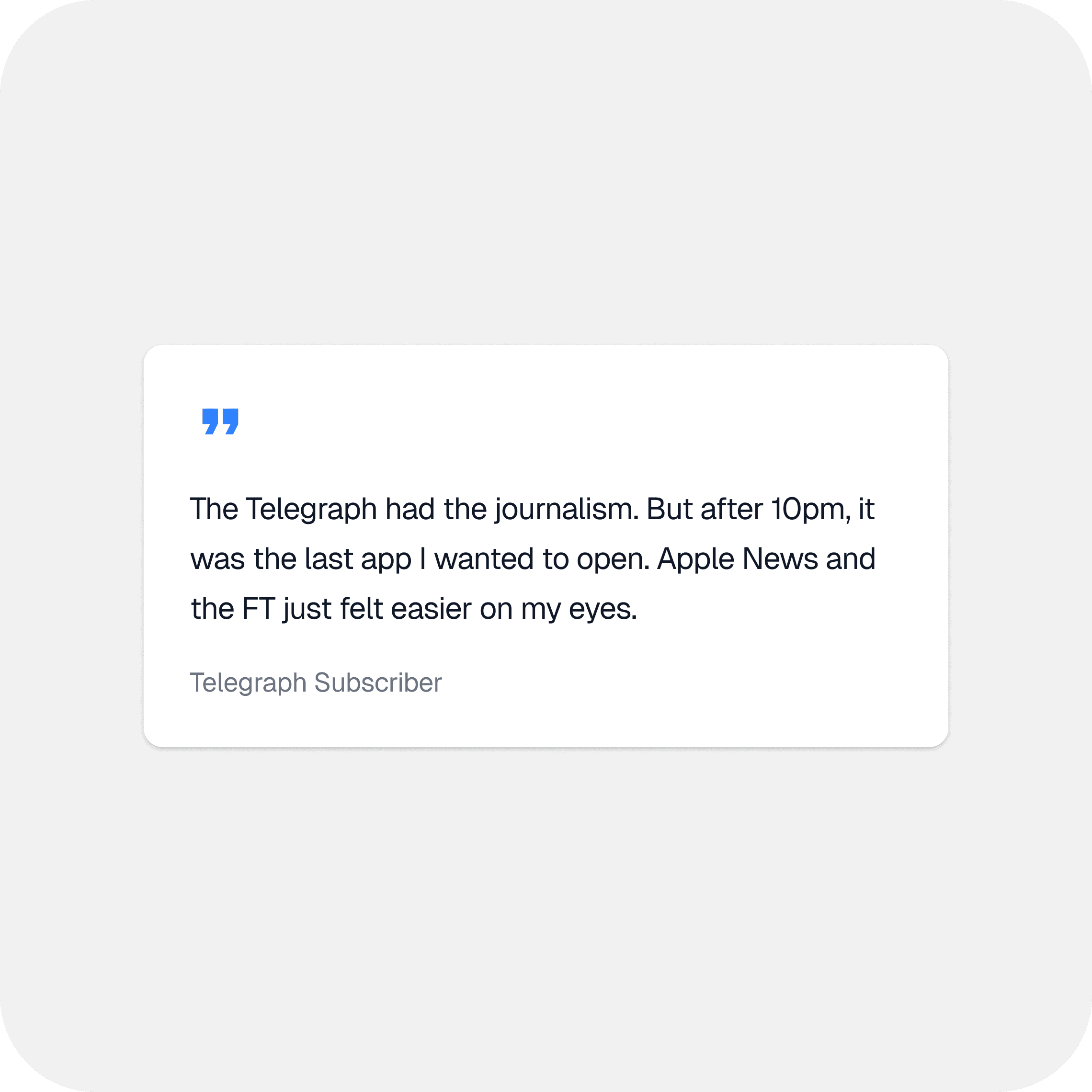
The Telegraph's app was designed for authority. Bright whites. Commanding typography. A layout that said trust us. It worked beautifully until 10 PM, when those same choices turned against the people using them.
Readers weren't just uncomfortable. They were leaving.
This wasn't a niche complaint. It was a pattern buried in the data, confirmed in usability sessions, and echoed in every late-night support email. Loyal subscribers the ones who'd paid for the privilege of quality journalism were squinting through their evening read like they were staring into a torch.
Something had to change.
My Role
Where I Fit In
I led the design of Dark Mode across the Telegraph's iOS and Android apps from January to June 2025. I owned the project end-to-end: user research, colour system design, component architecture, accessibility compliance, and engineering handoff.
I worked alongside a researcher, two product managers, and the iOS and Android engineering teams. The system launched globally in May 2025.
Discovery & Insights
What We Were Actually Solving
Early on, it was tempting to frame this as a colour problem. It wasn't.
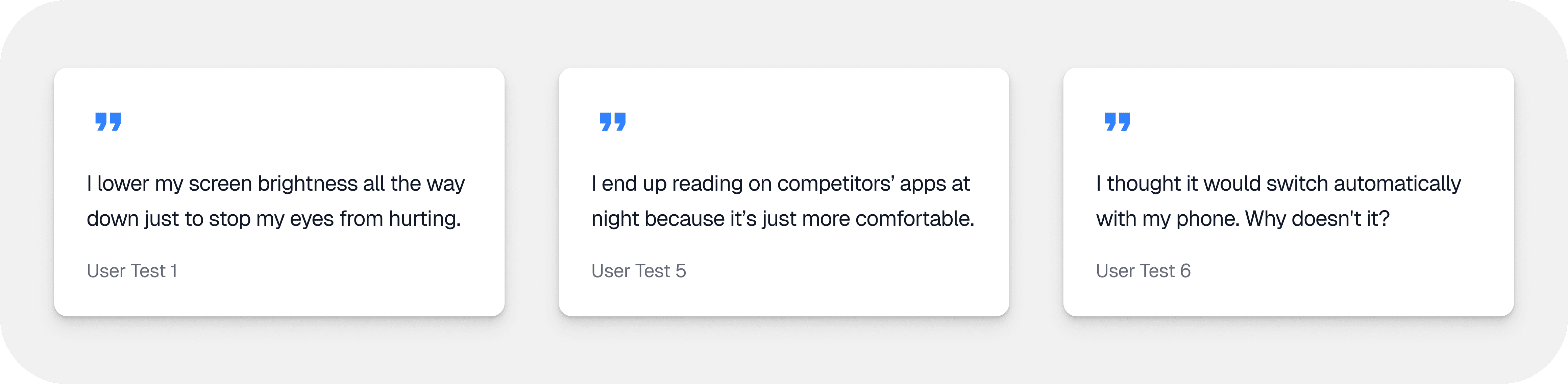
We ran evening interviews and usability sessions with readers. The patterns were immediate and consistent:
Eye strain was universal after 10 PM
Competitor apps were winning users not on editorial quality but on physical comfort
Readers expected the app to respond to their system settings. When it didn't, they felt let down
iOS and Android had made Dark Mode a system-level standard. For users, this had already redefined what "premium" meant. Premium wasn't just beautiful it was considerate. It noticed when the world went dark and adapted.
The Telegraph wasn't adapting.
Reframing The Problem
From Glare to Trust
We stopped asking "how do we add a dark theme?"
We started asking: How might we reimagine a daily newspaper for the moments when the world goes dark?
That reframe mattered. It moved us away from an inversion exercise and toward something more intentional a reading experience designed for time, for context, for the human being on the other side of the glass at midnight.
"If loyal subscribers were struggling to read comfortably, casual readers were leaving altogether. The discomfort wasn't just an inconvenience it was eroding trust."
The Design Solution
Reading, Reimagined for Night
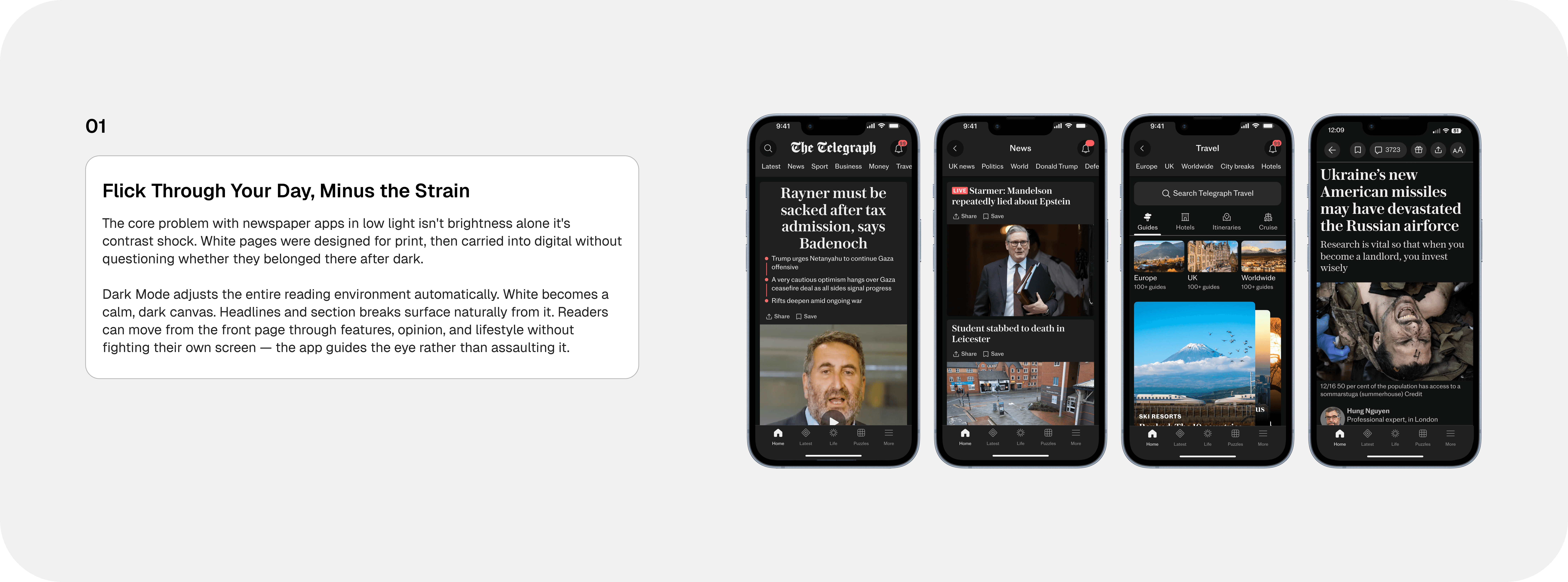
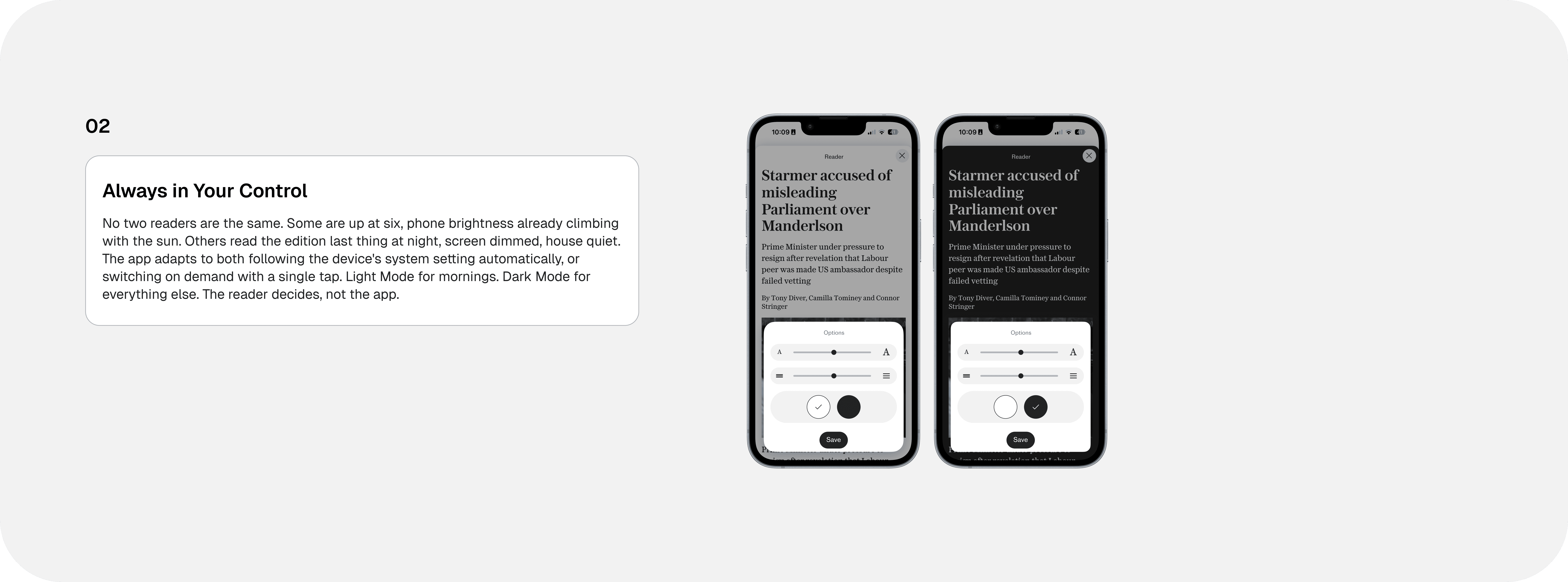
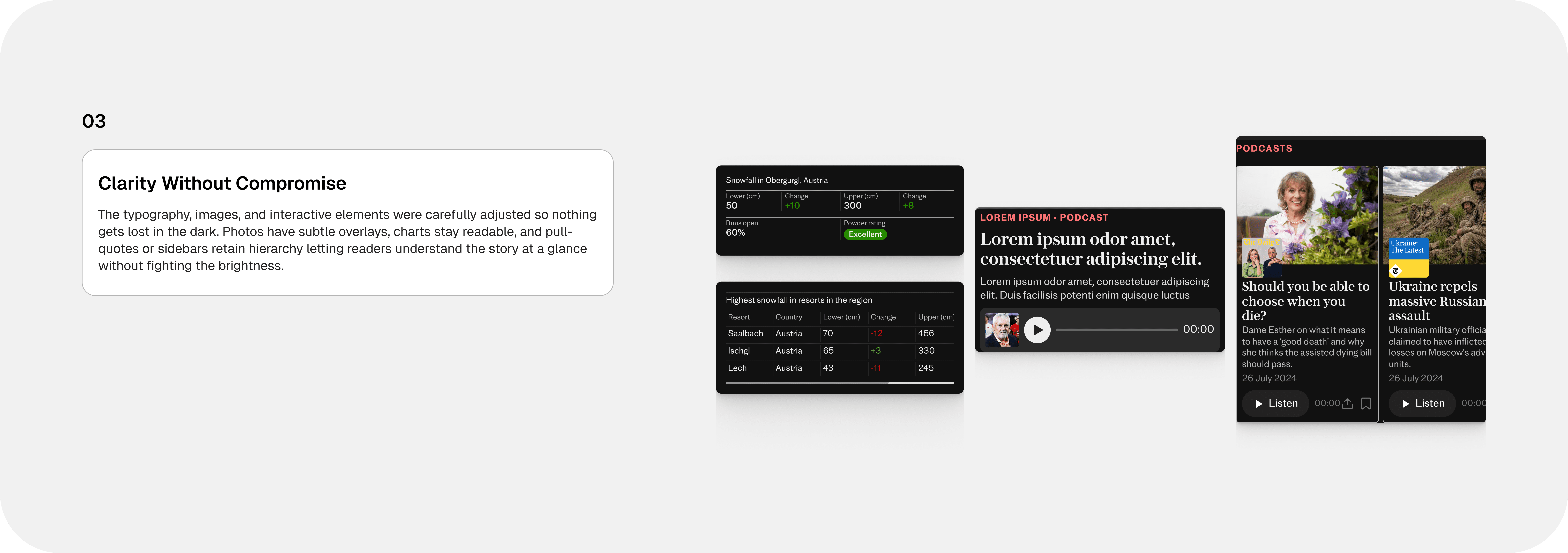
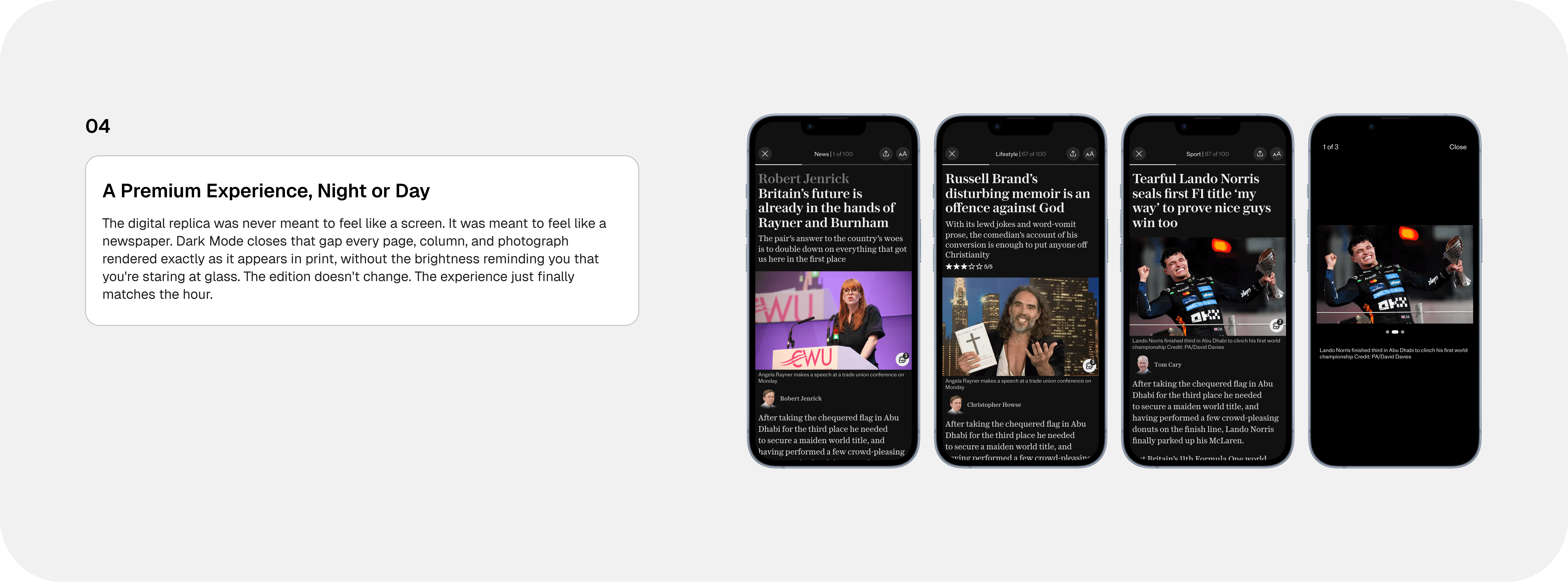
In a world where screens never sleep, reading the day’s paper shouldn’t feel like a glare assault. The Daily Telegraph app now brings your daily newspaper to Dark Mode, letting readers flick through each day’s edition effortlessly, comfortably, and beautifully whether it’s morning, midnight, or anywhere in between.
How We Got Here
Three Questions That Shaped Everything
Every decision in the system traced back to three problems worth solving:
1. How do we preserve brand authority without white backgrounds? The Telegraph's identity lived in its crispness. Any dark system that felt murky or generic would undermine the brand more than it helped readers.
2. How do we solve halation? White text on pure black creates a glowing, vibrating effect that's cognitively exhausting over long reads. We needed to kill it without killing contrast.
3. How do we hit 100% accessibility compliance and mean it? Not as a checkbox. As a design constraint that shaped every colour decision from the start.
The Colour Logic
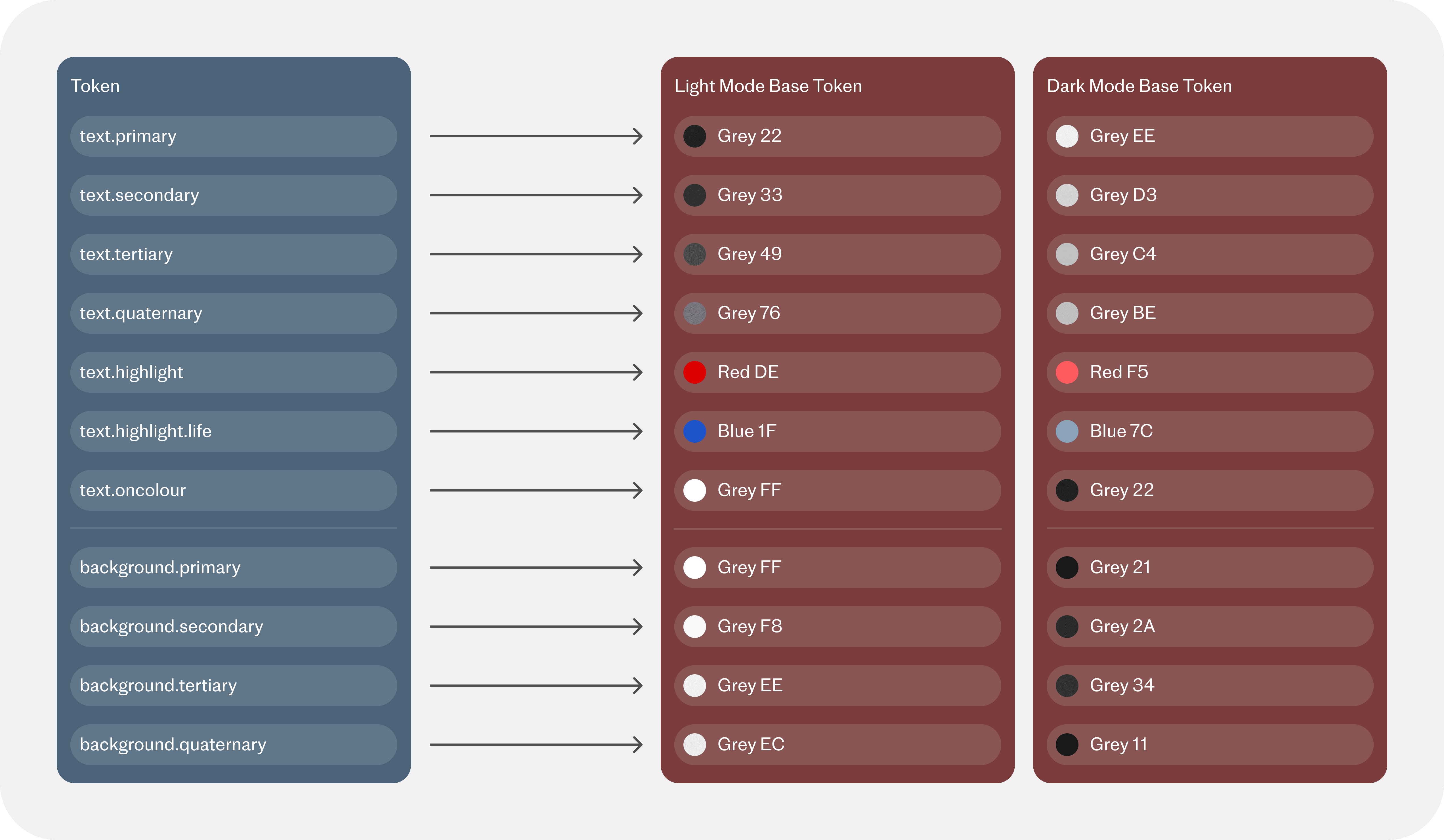
The vibration problem had a known solution and our own data confirmed it. Pure black backgrounds cause halation. Deep charcoal backgrounds don't.
We defined two anchors for the system:
Surface-0: Deep Charcoal a background dark enough for low-light comfort, warm enough to feel like paper
Text-Primary: Off-white at 90% opacity readable, calm, and distinctly not a monitor
The result was something we kept calling paper-like in testing sessions. Not because it looked like paper but because it felt like it. The eye relaxed. The reading slowed down in the right way.
The Impact
What Changed When the Lights Went Out
When we launched in May 2025, the results were direct and measurable:
+23% article completion in evening sessions
85% of users reported reduced eye strain
−30% engineering time to theme new components
4.1 →4.6 App Store rating uplift post-launch
That last number mattered more than it sounds. A tokenised system means every future product decision every new component, every new surface inherits the work automatically. We didn't just fix Dark Mode. We built a foundation.
Reflections & Insights
What the Dark Taught Us
This project started as a visual problem and became something else entirely.
Accessibility and brand identity are often treated as opposing forces as though one compromises the other. This project proved the opposite. When you approach them with intention, they reinforce each other. The constraint of accessibility improved the brand experience.
The deeper lesson was about context. Design has always responded to space. This was a reminder that it also has to respond to time.
Next Steps
We're expanding the system to web. OLED Black is in the roadmap for battery-saving modes on supported devices.
Because great design doesn't stop when the lights go out. It was waiting for that moment all along.