Find it. Love it. Cook it.
tYPE
UX Design · UI Design · Research
ROLE
Lead Product Designer
pLATFORM
Cross-platform (Web, iOS, Android)
TOOLS
Figma · FigJam · UserZoom · Google Analytics
The Context
The Archive Had No Front Door
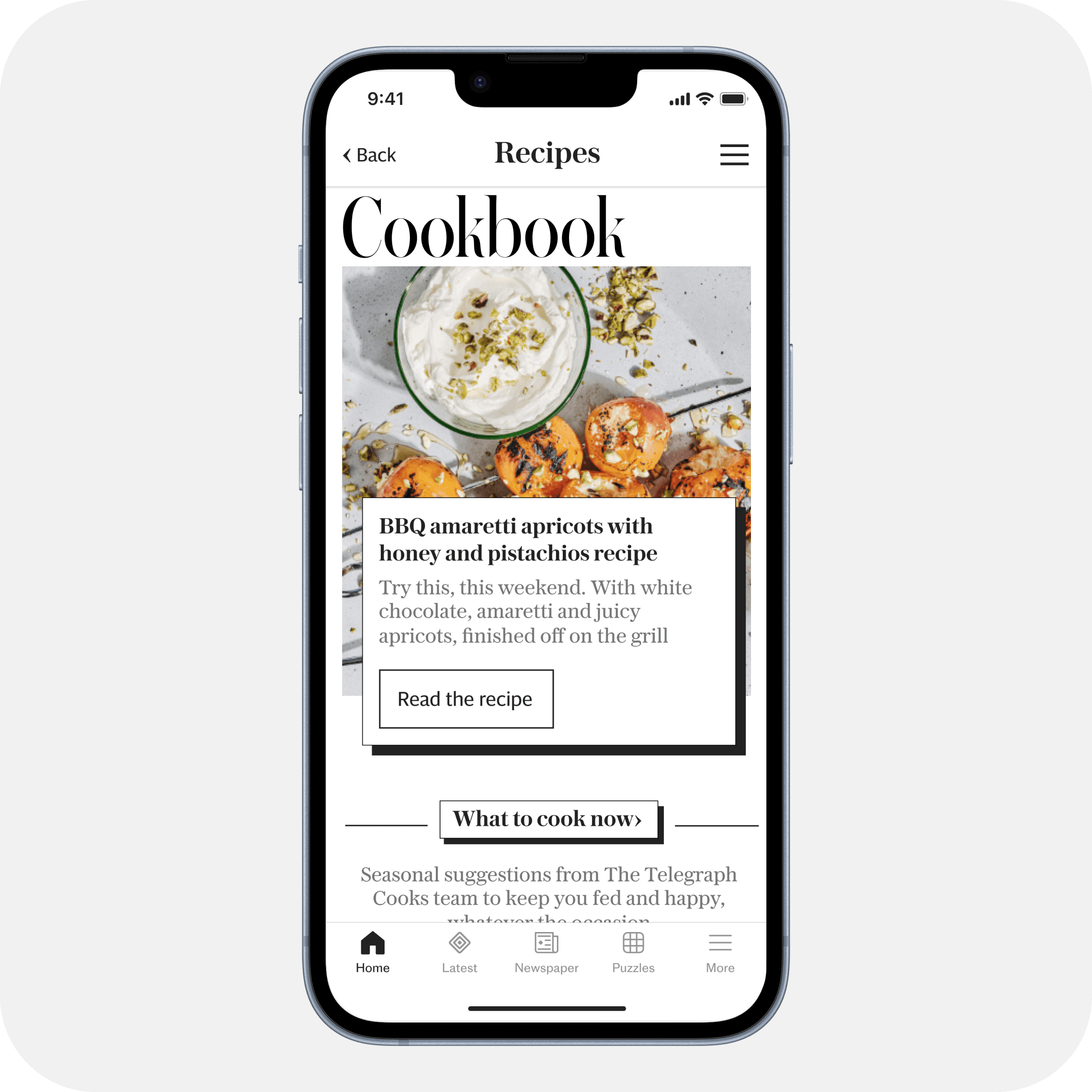
In 2024, The Daily Telegraph possessed one of the UK's most prestigious recipe archives. But for the modern home cook standing in a kitchen at 6pm, it was invisible. Thousands of recipes, built over a decade, sat locked behind a search bar that assumed you already knew what you wanted.
I led a 10-month project to change that. Transforming a static editorial archive into an intelligent Recipe Finder that bridged the gap between The Telegraph's authority and a reader's actual dinner.
The Challange
When "Vast" Becomes "Useless"
Over a decade, The Telegraph had amassed thousands of recipes. But they were built as one-off articles, not a connected system. By 2024, the cracks were showing.
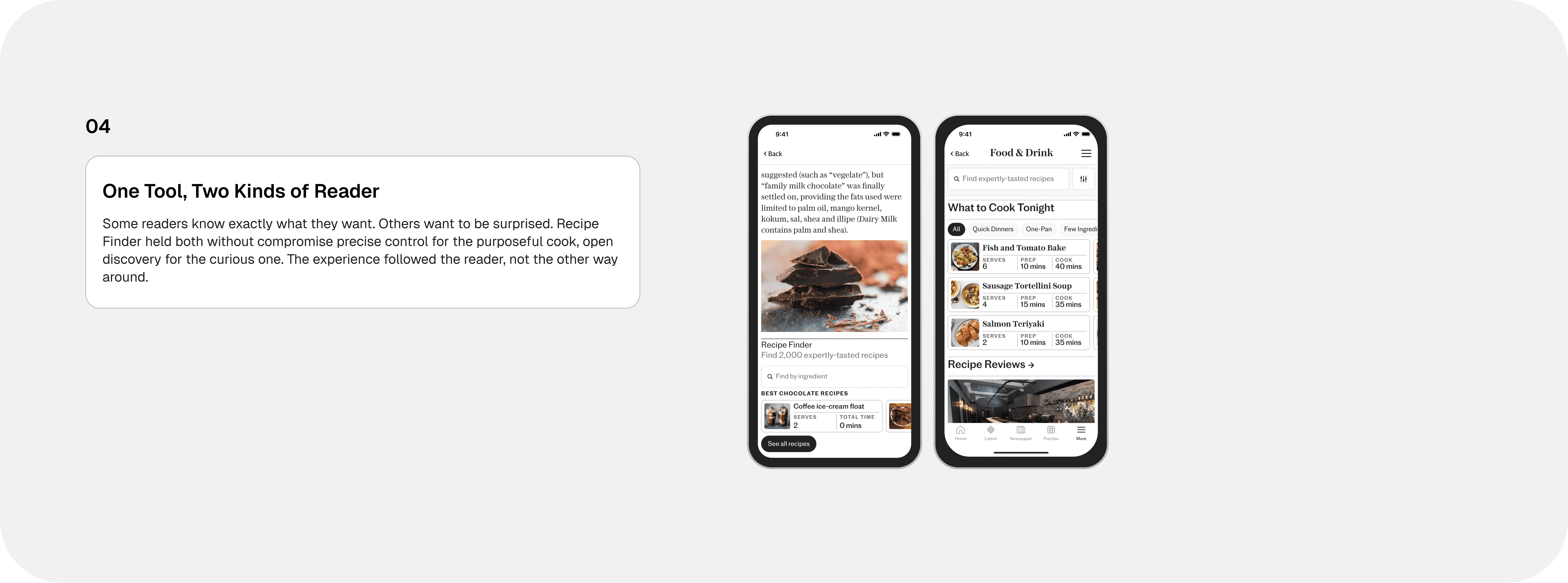
A "Quick Dinner" meant 15 minutes to one editor and 45 to another. Recipes were buried in a linear feed you had to already know what you wanted before you could find it. And if you opened the fridge and realised you were missing one ingredient, the experience simply ended. No pivot. No alternative. Just a dead end.
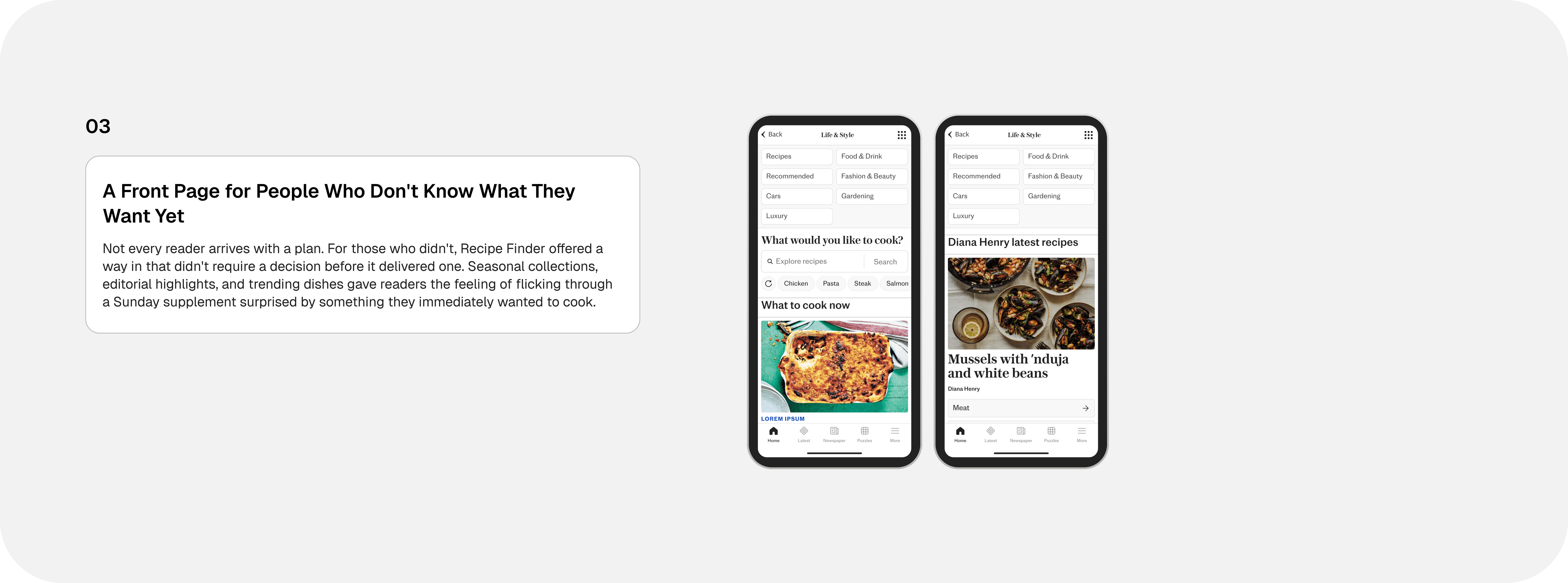
Our goal was to recapture the magic of the Sunday supplement that feeling of turning a page and being surprised by something you immediately want to cook but with the speed and precision of a modern utility.
Three goals shaped everything: collapse the time between opening the app and sitting down to eat; turn dietary restrictions and time constraints into discovery tools rather than filters that shrink results; and let the editorial archive tell seasonal stories, not just list ingredients.
My Role
Where I Fit In
I led end-to-end design from Feb 2024 to August 2024, owning everything from initial research through to engineering handoff. I worked alongside a Product Manager, a Data Scientist responsible for rebuilding the recipe tagging logic, and a Lead Engineer. The Data Scientist partnership turned out to be the most consequential relationship on the project.
Discovery & Insights
What We Saw When We Watched People Cook
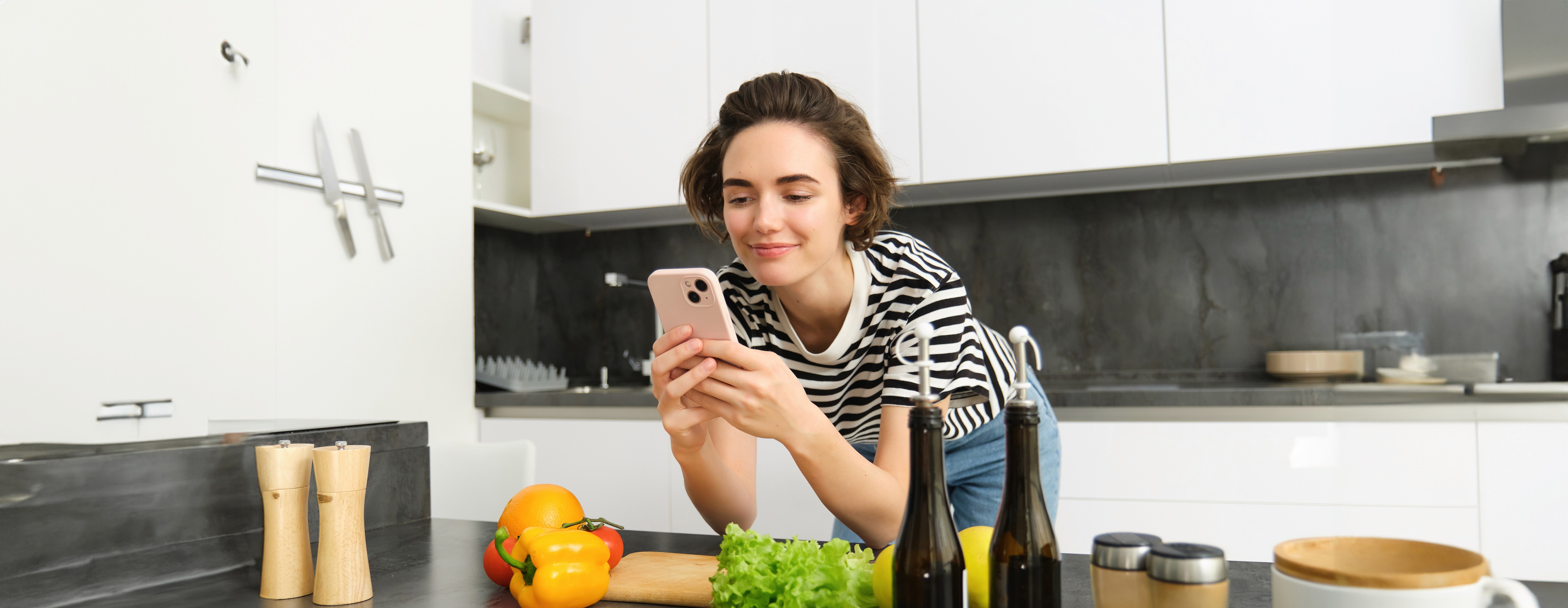
We didn't start with a brief. To find one, I partnered with our researcher and watched how people actually make dinner. Eight usability sessions. Real kitchens, real commutes, one hand on a phone.
Three things became impossible to ignore.
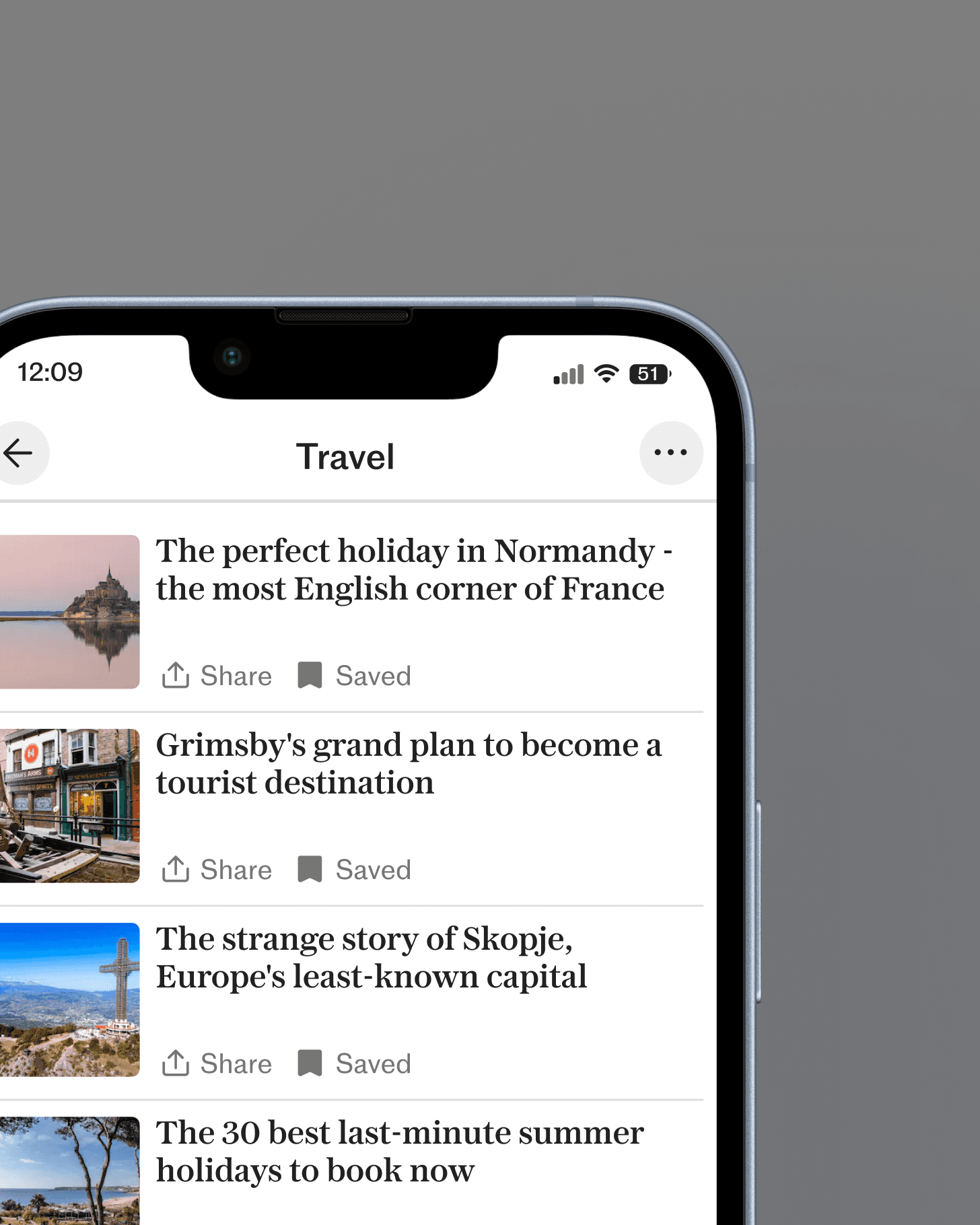
Users weren't overwhelmed by a lack of recipes they were overwhelmed by the wrong ones appearing at the wrong time. They consistently opened the fridge first and the app second, but our search assumed the opposite. And 85% were navigating with one thumb while standing up, a physical reality the existing experience completely ignored.
Reframing The Problem
We Weren't Building a Search Engine
The research reframed everything. We weren't building a better way to find recipes. We were building a bridge between what a reader had in their kitchen and what The Telegraph knew how to make extraordinary.
Users didn't want more recipes. They wanted fewer, better decisions.
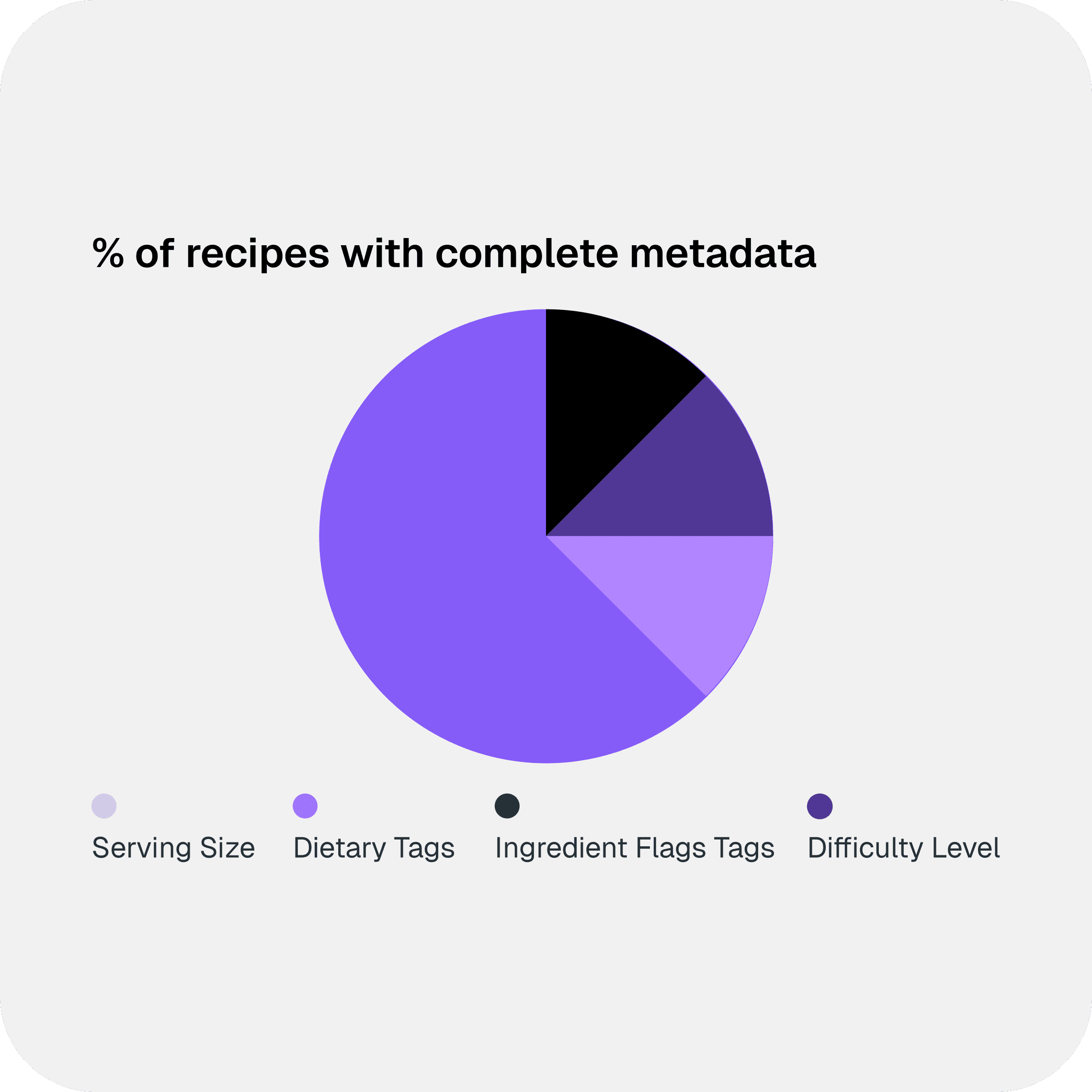
To understand the full scale of the problem, I partnered with our Data Scientist to audit the archive. What we found was sobering: 45% of recipes had no "Time to Cook" metadata at all. Users were regularly abandoning the app mid-session to search Google for substitutions because our recipes assumed a perfectly stocked kitchen. The archive wasn't just hard to navigate it was factually incomplete.
The real question became: how might we help a reader build a better dinner plan, starting from wherever they actually are?
The Design Solution
Reading, Reimagined for the Kitchen
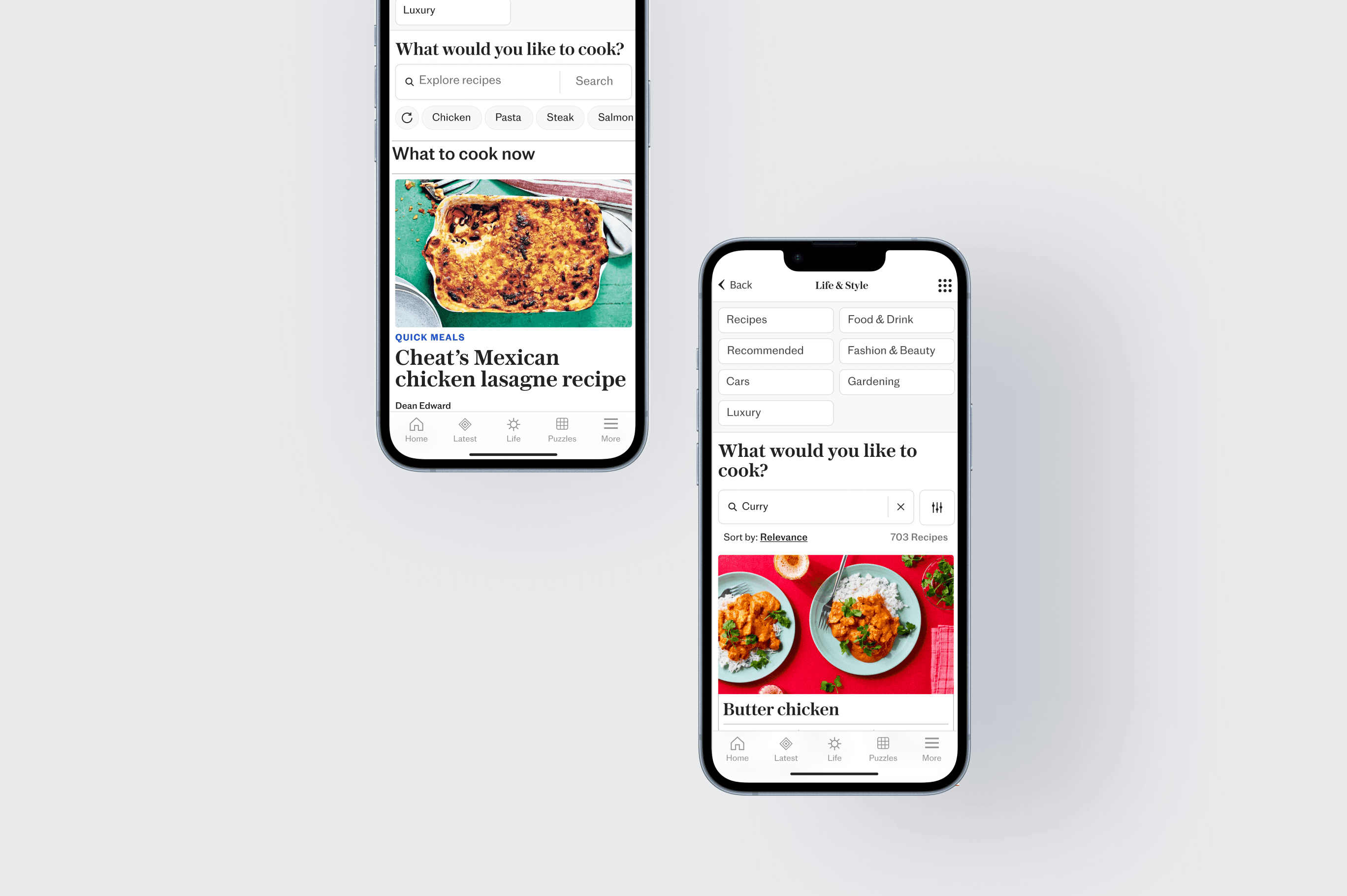
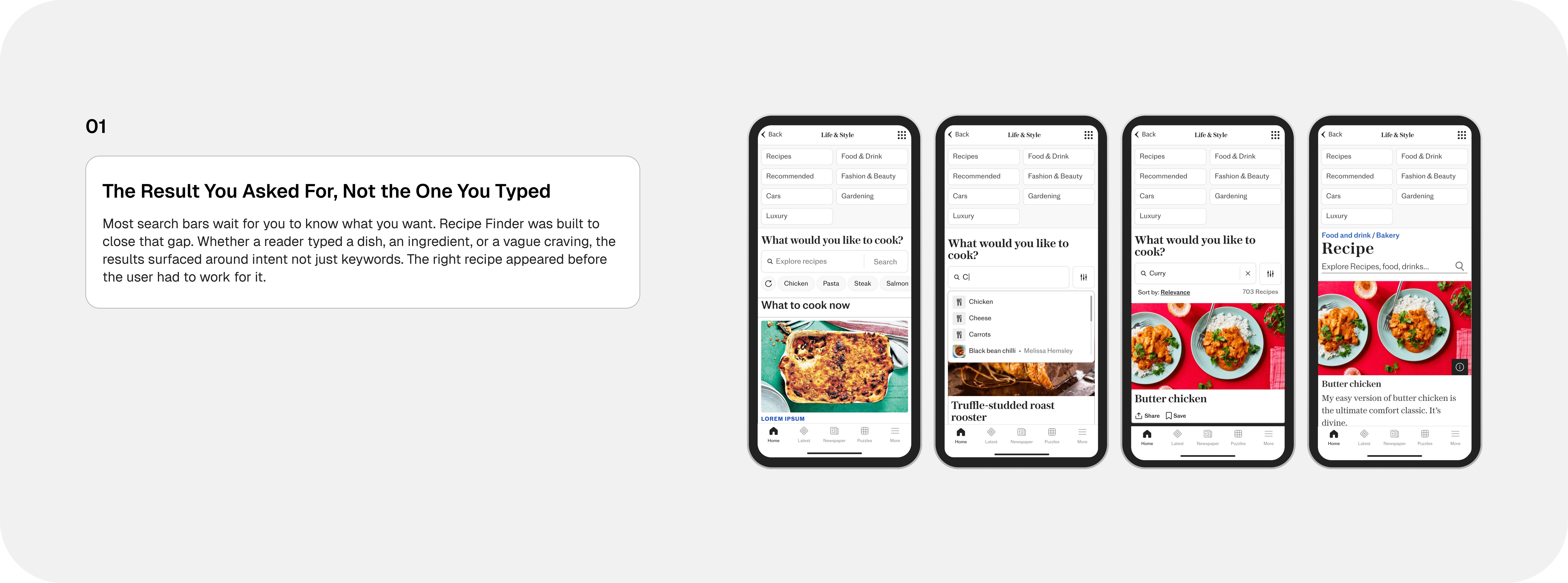
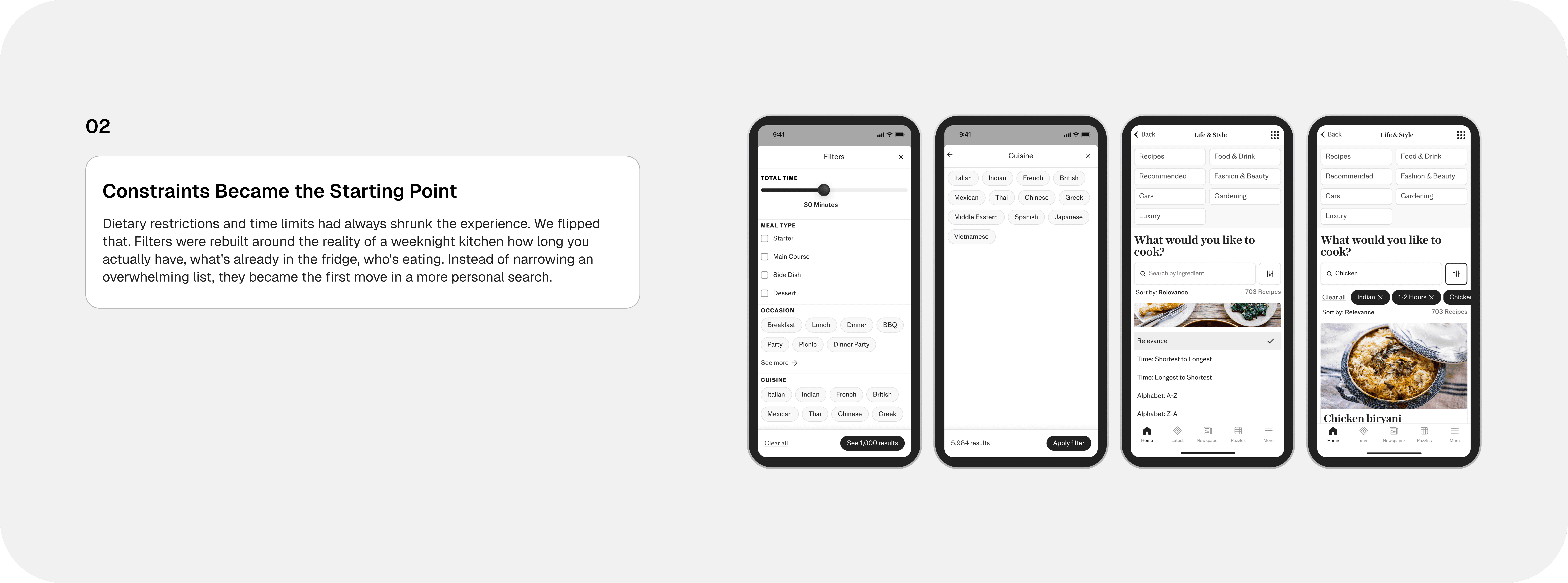
Recipe Finder was built on one idea: make fewer decisions feel like the right ones. Rather than surfacing everything and expecting readers to filter down, the experience was designed to surface the most relevant result first and make every subsequent choice feel smaller, not larger.
How We Got Here
The Problem Beneath the Problem
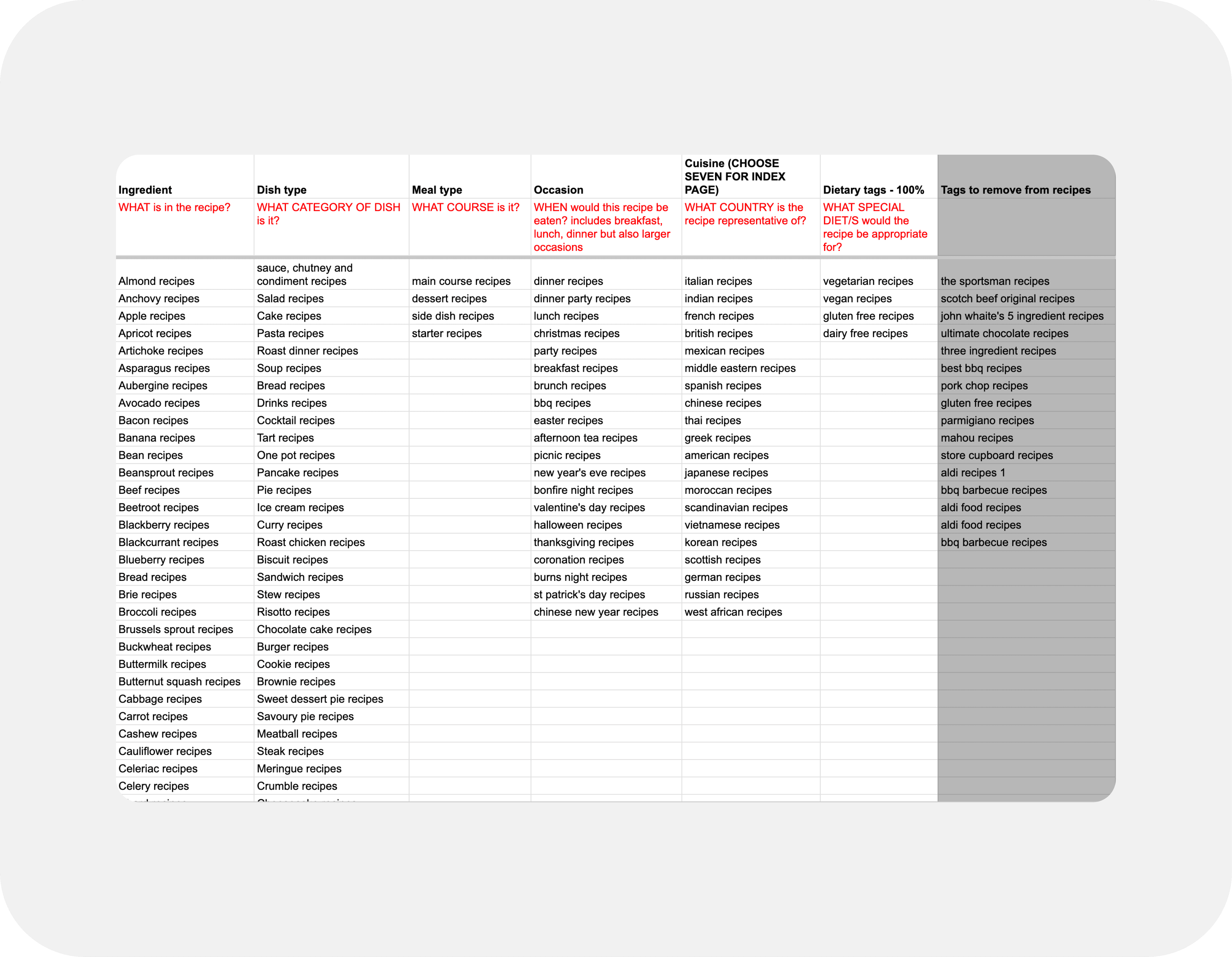
The design decisions were only possible because we fixed the data first. No interface can surface "Time to Cook" if 45% of recipes don't have it. Before a single screen was designed, I worked with our Data Scientist to establish a tagging taxonomy standardising cooking time, dietary attributes, and ingredient flags across the entire archive.
This wasn't glamorous work. But it was the work that made everything else possible.
The Impact
What Changed When Dinner Got Easier
The redesign moved the needle on both speed and engagement.
−38% time to first relevant recipe result
−29% "No Results Found" screens
+17% recipe save rate from finder sessions
45% of archive retagged before design began
Reflections & Insights
What the Kitchen Taught Us
This project confirmed something I now think about on every brief: a product is only as good as the data underneath it. The interface we designed was only possible because we fixed the archive's brain first. Design and data aren't separate workstreams on this project, they were the same one.
The other lesson was about constraints. Dietary restrictions and time limits had always been treated as filters that narrowed the experience. Reframing them as the starting point of discovery the thing that makes a recommendation feel personal rather than generic changed how the entire product thought about relevance.
Clear, Helpful Filters
A hands-free voice mode for active cooking is in scoping. A personalised Pantry feature one that remembers what a reader keeps at home and uses it to make future recommendations instant is the longer horizon. The archive is finally a living thing. The next question is how well it can learn.