Recommendations you’ll love.
tYPE
UX Design · UI Design · Research
ROLE
Lead Product Designer
pLATFORM
Cross-platform (Web, iOS, Android)
TOOLS
Figma · FigJam · UserZoom · Google Analytics
The Context
170 Years of Trust, One Click Away From Being Ignored
The Daily Telegraph had spent 170 years earning the trust of its readers. By 2025, that trust wasn't making it into the shopping experience. World-class product expertise sat buried in generic article templates, indistinguishable from the sponsored content readers had trained themselves to scroll past.
I led a 5 month initiative to change that transforming scattered reviews into a unified commerce platform that turned editorial authority into something readers could actually act on.
The Challange
The Expertise Was There. The Experience Wasn't.
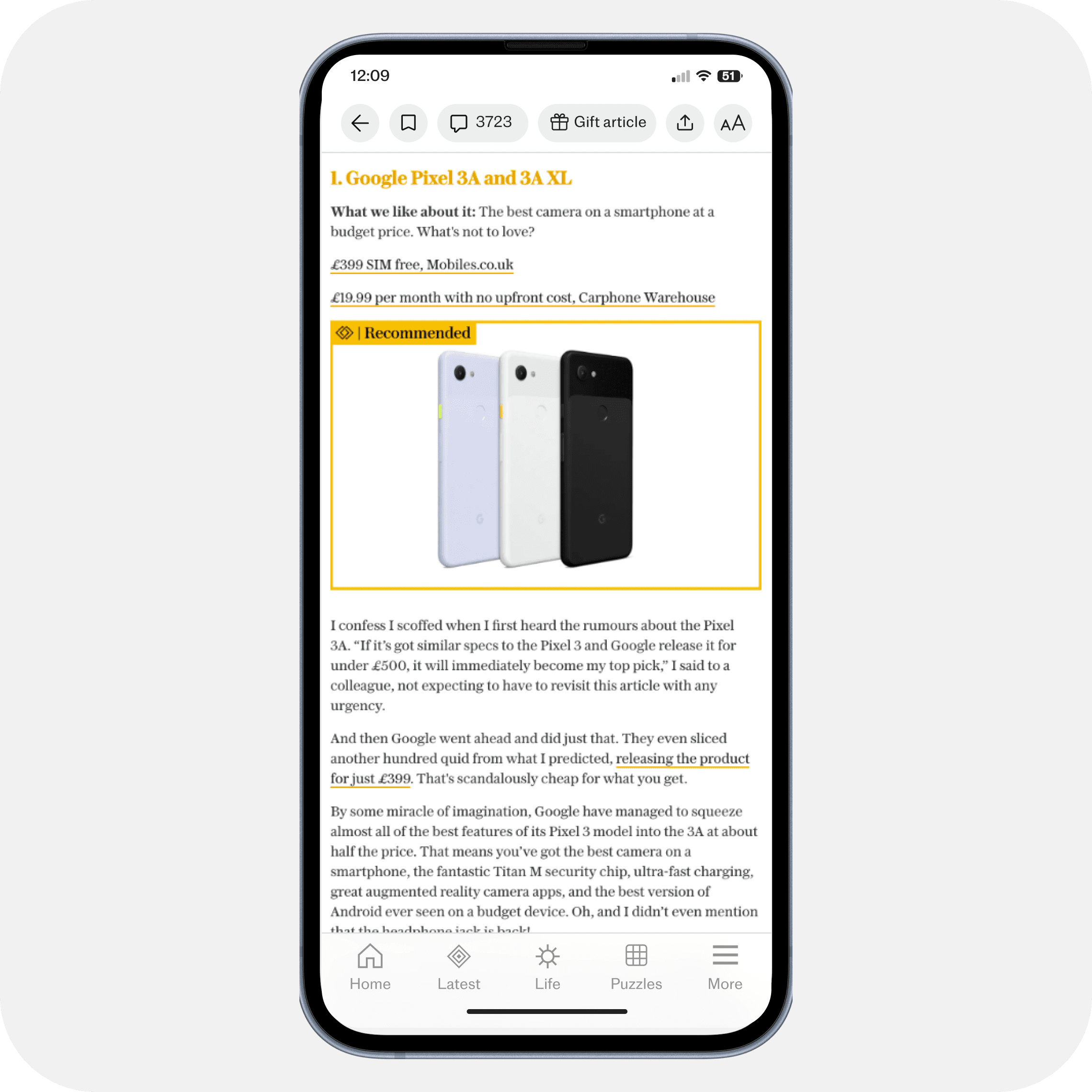
The Telegraph's problem wasn't credibility. It was visibility. Readers trusted the journalism. They just couldn't find the recommendations when they needed them, and when they did, the presentation undermined the very authority that made them worth reading.
Three things were breaking the experience.
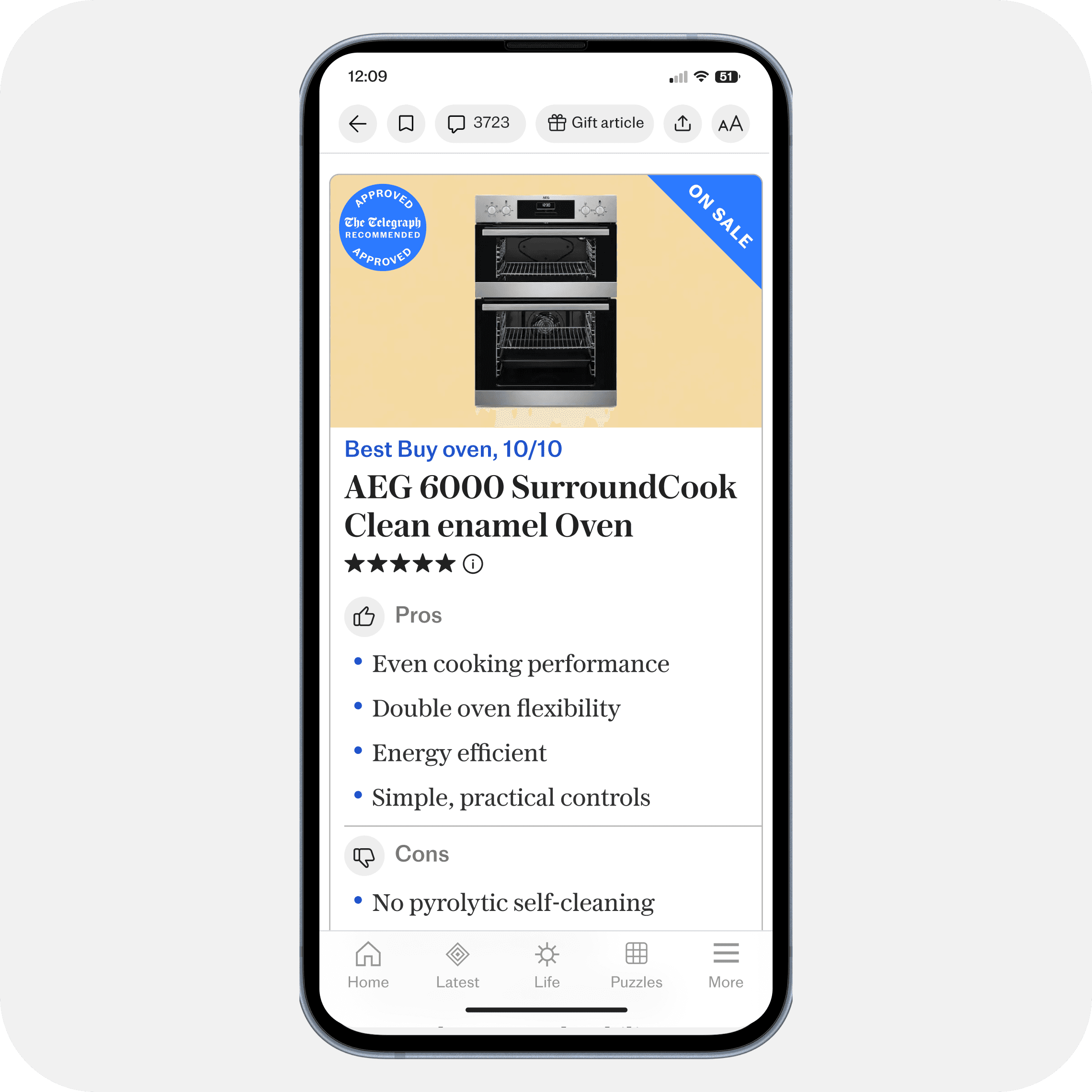
Reviews lived inside generic article templates that looked identical to sponsored content. Readers had developed a reflex a "second-tab habit" of leaving the site mid-decision to verify prices and stock elsewhere. And there was no central place to discover what The Telegraph actually recommended. Readers were outsourcing that job to Google.
The trust existed. The product just kept getting in its own way.
My Role
Where I Fit In
As the sole Product Designer, I owned the end-to-end experience across the full 10 months. My mandate was to bridge the gap between two very different readers the decisive shopper who arrives knowing what they want, and the browser who needs to be surprised into a decision. I led design direction, ran the foundational research, and managed stakeholder alignment across editorial, commerce, and engineering.
Discovery & Insights
What We Found When We Watched People Shop
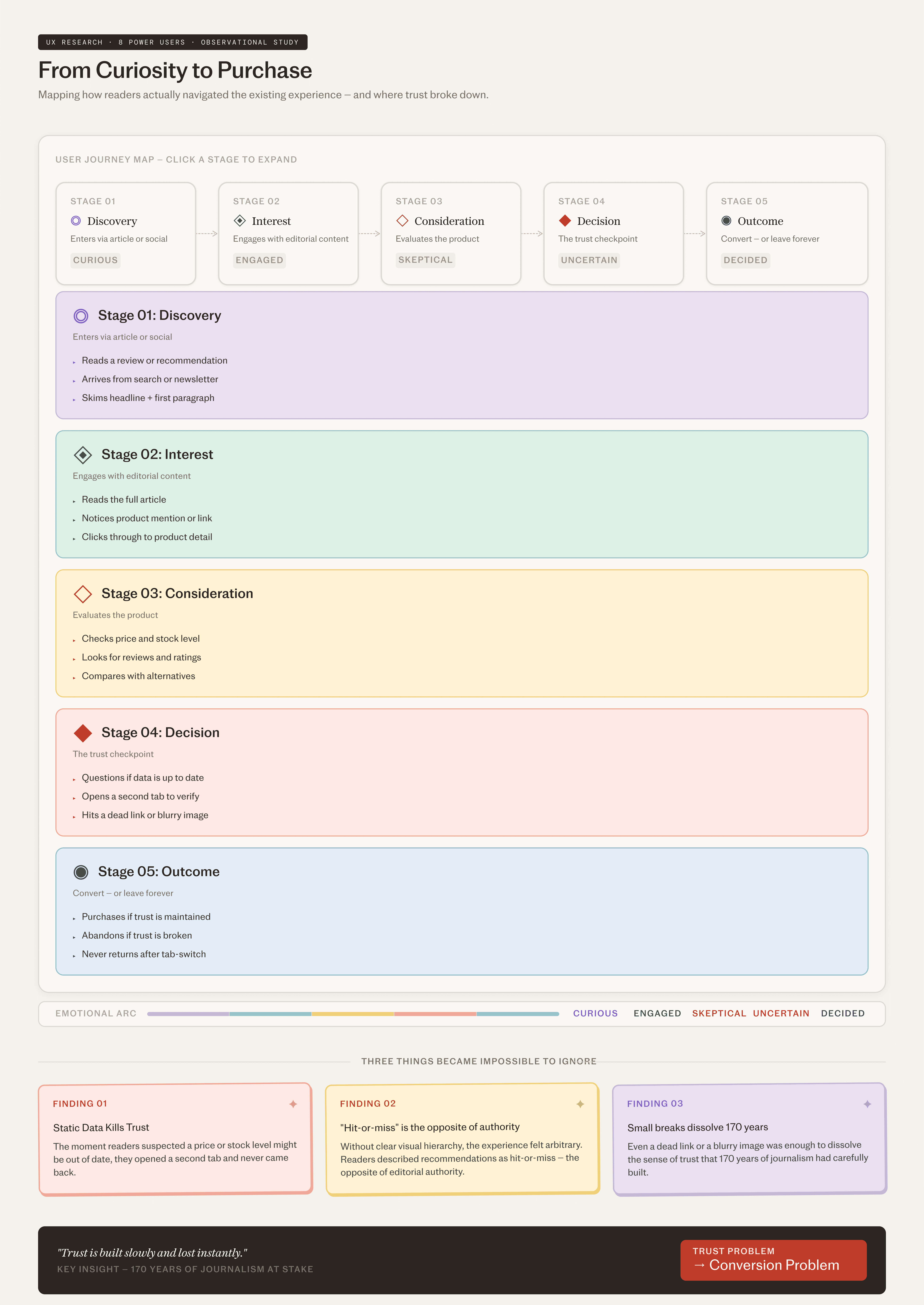
We didn't start with a conversion problem. We started with a trust problem. To understand it, I mapped how readers actually moved from curiosity to purchase observing eight power users as they navigated the existing experience.
Three things became impossible to ignore.
Readers didn't trust static product data. The moment they suspected a price or stock level might be out of date, they opened a second tab and never came back. Without clear visual hierarchy, the experience felt arbitrary readers described recommendations as "hit-or-miss," which is the opposite of editorial authority. And the detail that stayed with me most: even small breaks in the experience a dead link, a blurry image were enough to dissolve the sense of trust that 170 years of journalism had built.
Reframing The Problem
Reframing the Problem
We Weren't Building a Shopping Page
The research made the real brief clear. We weren't fixing a commerce template. We were rebuilding the conditions under which a reader would trust a recommendation enough to act on it.
Readers didn't need more products. They needed fewer reasons to doubt.
Every design decision that followed was tested against one question: does this make a reader feel more or less certain? Real-time pricing and stock signals addressed the second-tab habit directly. Visual hierarchy that separated editorial voice from product data made recommendations feel authored, not generated. And a unified discovery hub meant that for the first time, a reader could find what The Telegraph recommended without leaving for Google.
The Design Solution
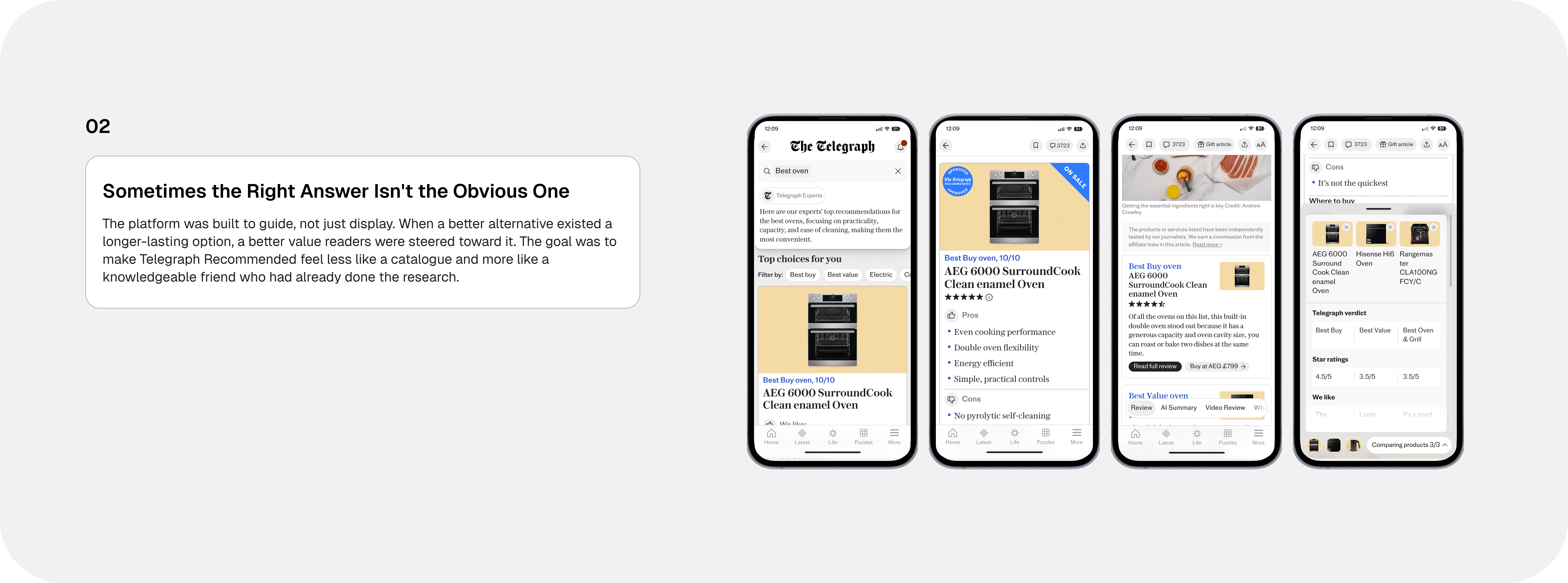
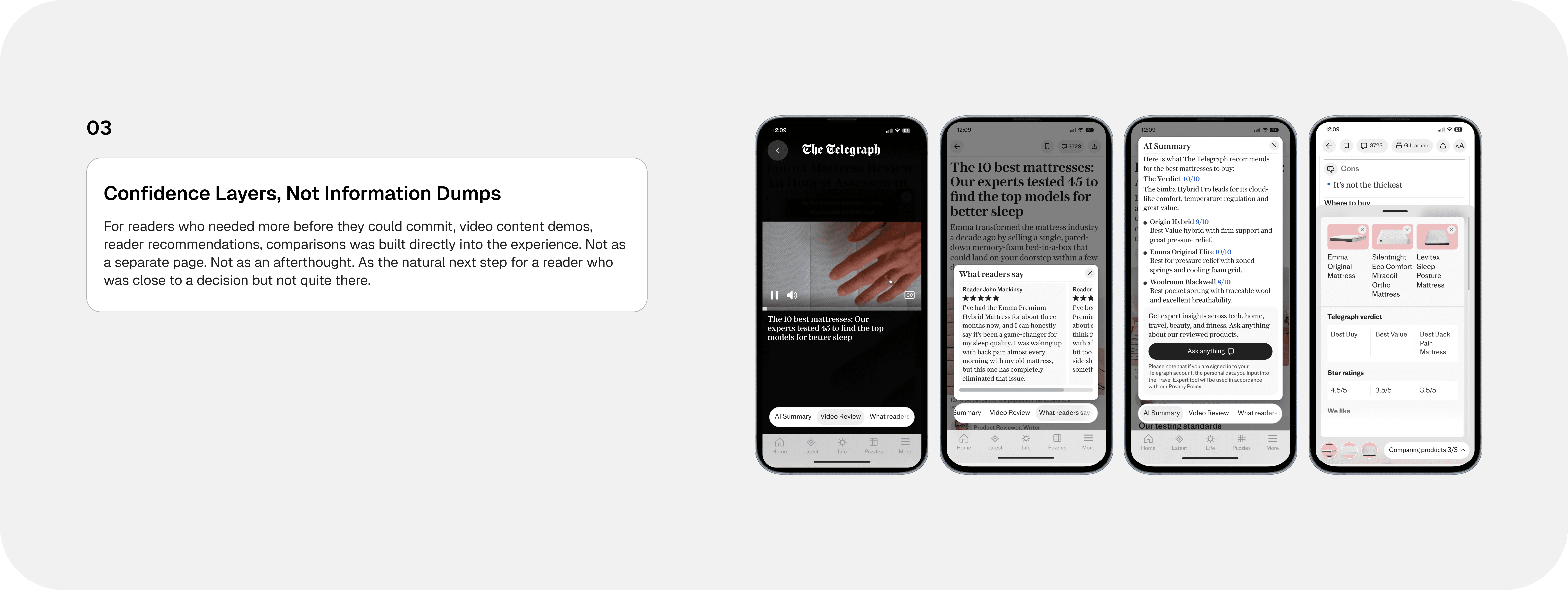
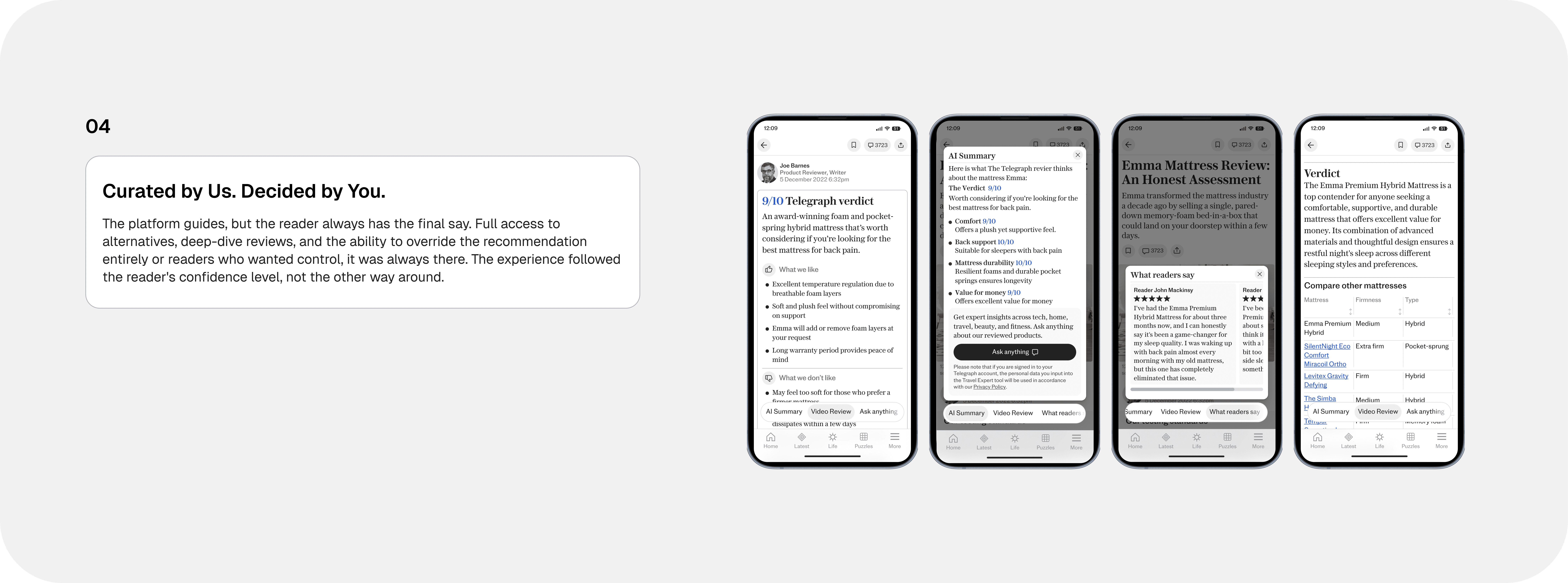
A Platform Built Around the Moment of Doubt
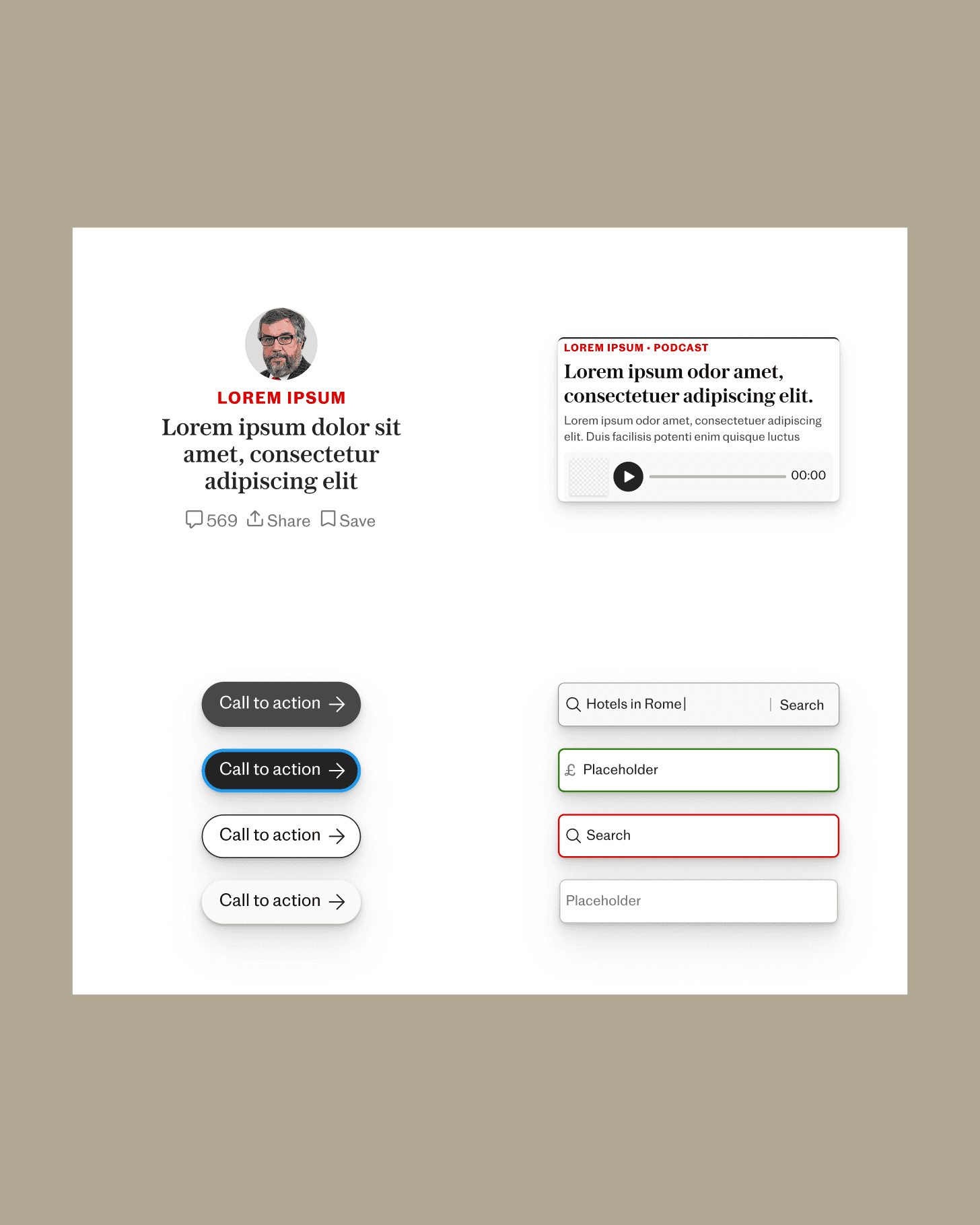
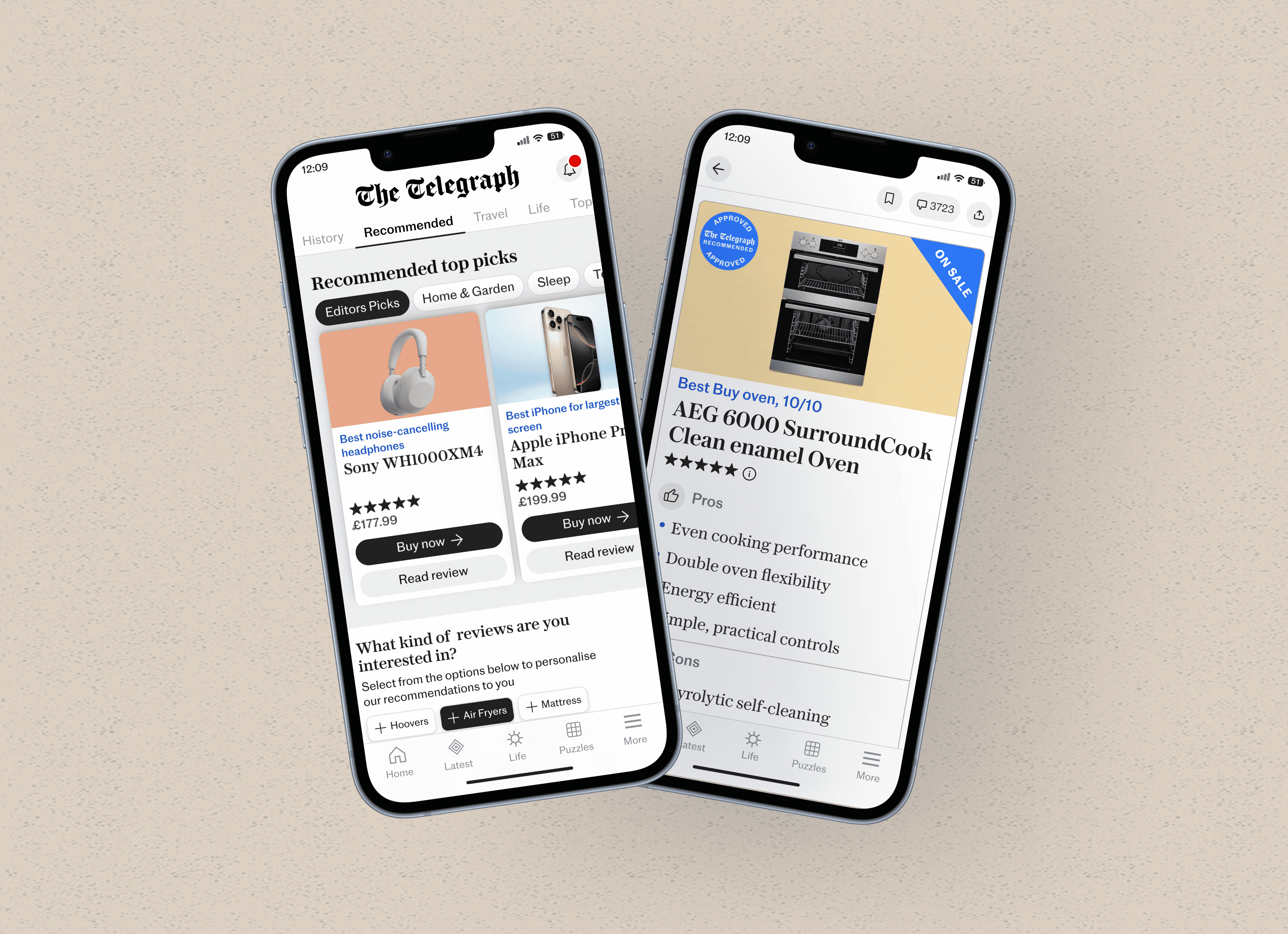
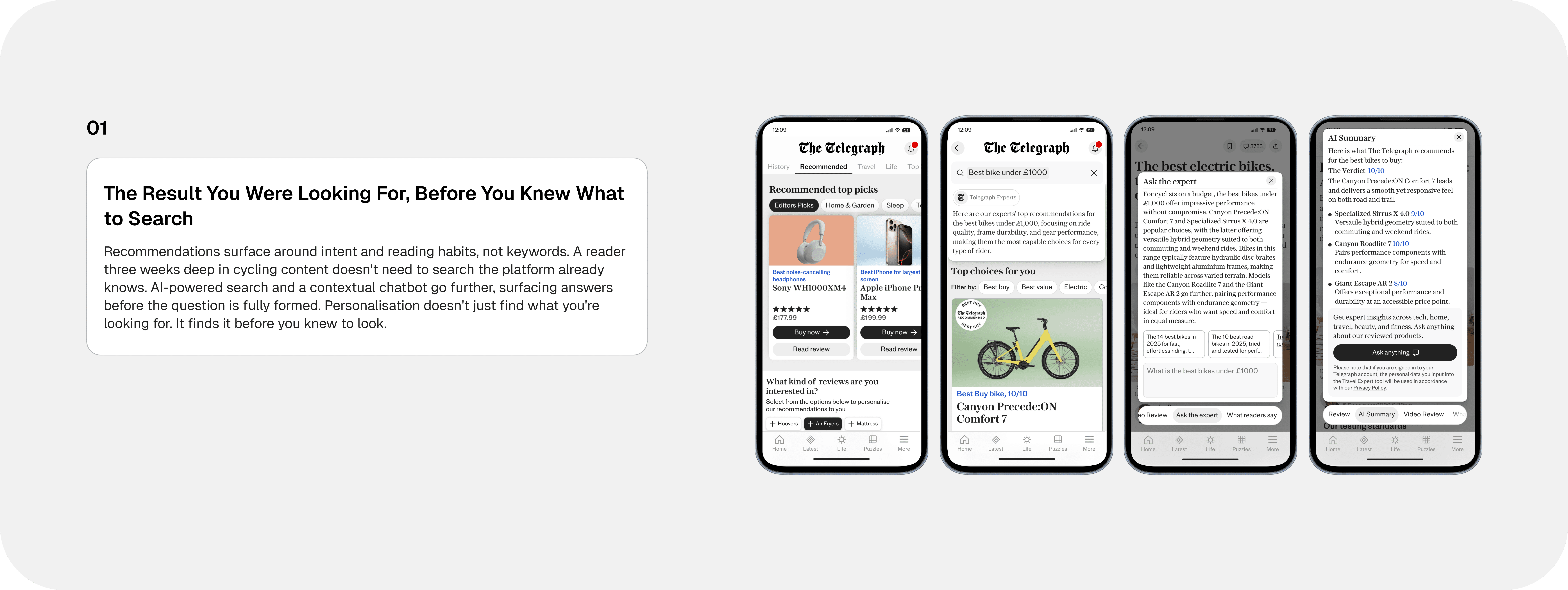
Telegraph Recommended was designed around a single insight: the moment a reader hesitates is the moment you lose them. Every feature was built to answer the question forming in their head before they had to ask it.
How We Got Here
The Detail That Changed Everything
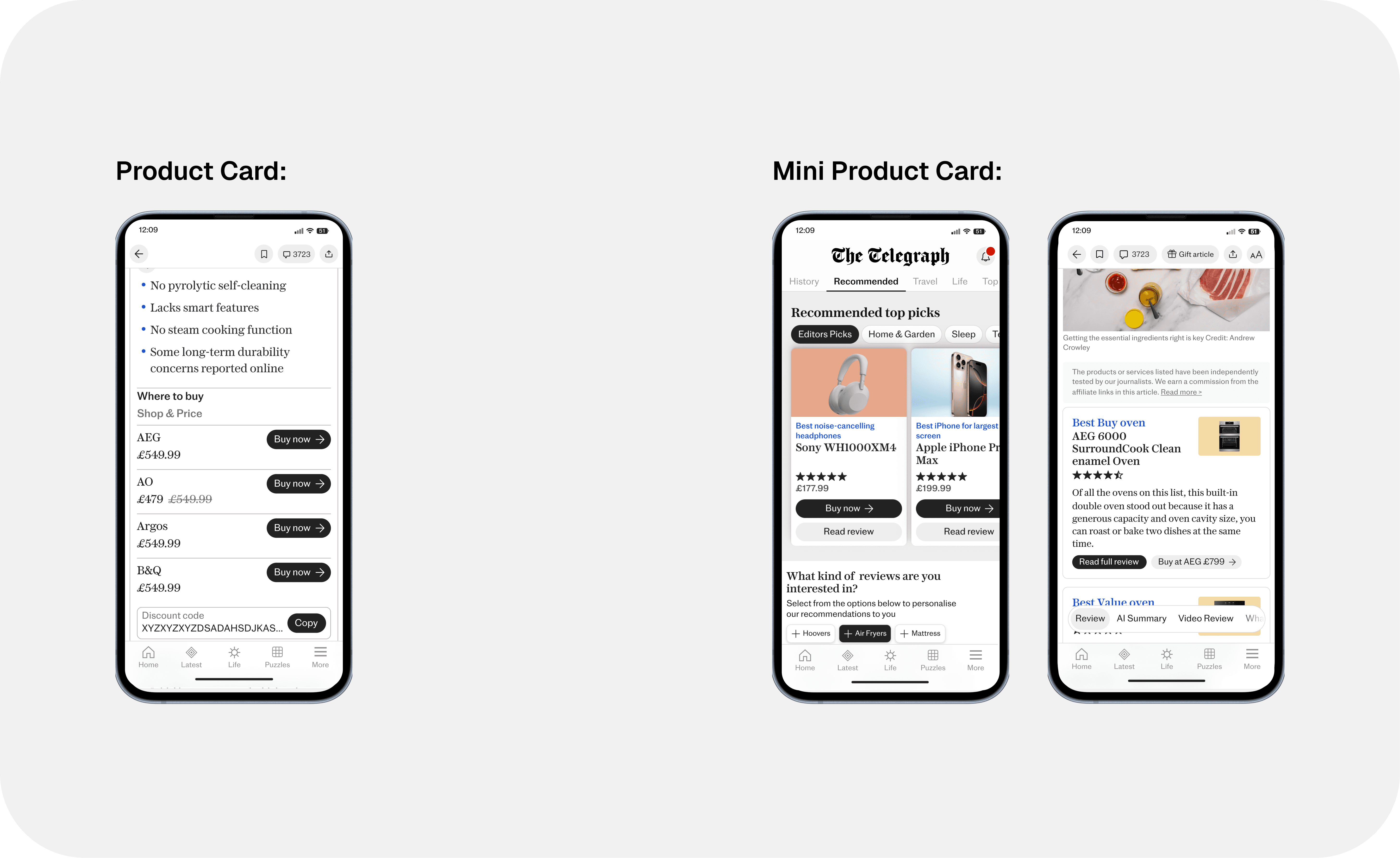
The most important design decision wasn't a layout choice. It was a data one. The second-tab habit was costing more conversions than any UX friction and it was caused entirely by readers not trusting that product information was current.
Working with engineering, we built real-time pricing signals directly into the recommendation cards. It was technically unglamorous. But it was the single change that made everything else believable. A beautifully designed recommendation that links to a wrong price destroys trust faster than a bad layout ever could.
The Impact
What Happened When Trust Became the Product
Launched in September 2024, the redesign moved the needle on the metrics that matter most in commerce.
+34% affiliate click-through rate
−41% mid-session exit rate on product pages
+26% time spent in Recommended hub
2× increase in cross-category discovery per session
Reflections & Insights
Authority Is the Most Valuable Currency in Commerce
This project taught me something I now carry into every brief: trust is not a feeling — it's a series of details. A live price. A crisp image. A link that works. A recommendation that explains itself. Each one is small. Together they either build or destroy the thing that makes a publisher's commerce offering worth anything at all.
The Telegraph's authority wasn't the problem. The product just kept undermining it. Once we stopped treating commerce as a separate surface and started treating it as an extension of the editorial voice, everything else followed.
Next Steps:
Personalised recommendation styles tailored to a reader's existing content habits are in scoping. Real-time stock alerts for saved items are on the near-term roadmap. The platform is built. The next question is how well it learns who's using it.